
Scotland - an ultimate road trip guide not only for photographers
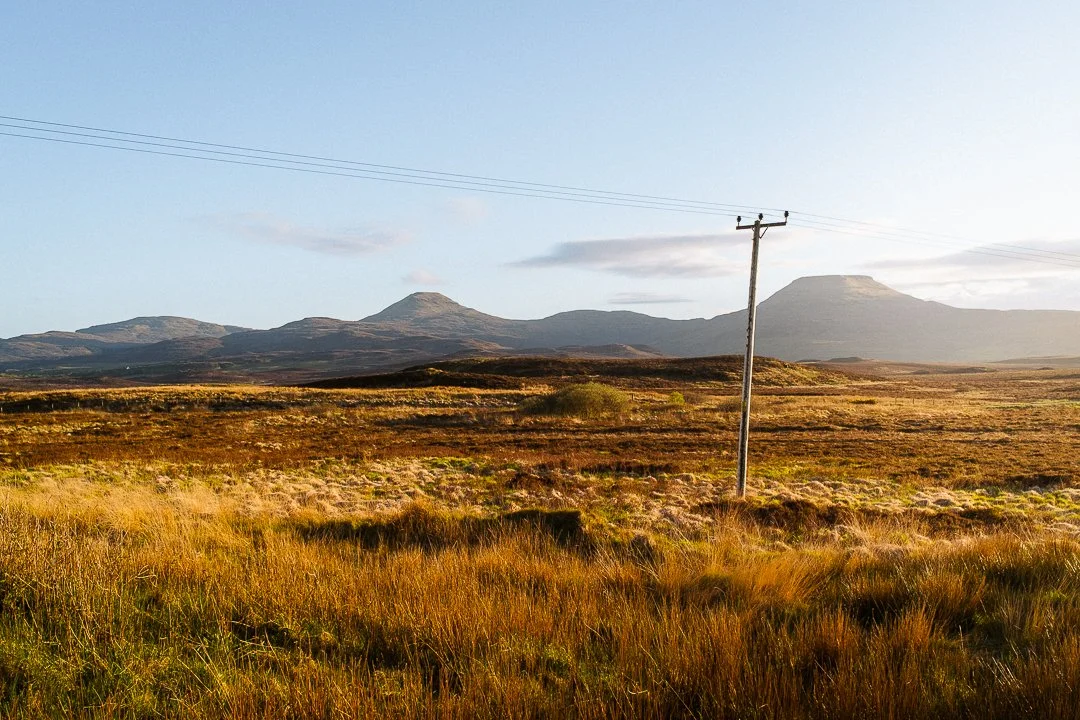
A fellow photographer once said (Max, if you're reading this: greets!) that if he had to photograph just one country for the rest of his life, it would be Scotland.
I agreed with him back then, but I think it's only now, after two weeks on the road and 3,000 kilometres driven across UK, that I can say, without hesitation: yes, me too.
I've travelled Scotland by train, in a rental car, and this time it was finally time for a longer trip in our own vehicle. Out of those three options, this one speaks to me the most.
Consider this guide a summary for anyone heading to Scotland, with an own car or not, whether your main goal is photography or simply exploring the country.
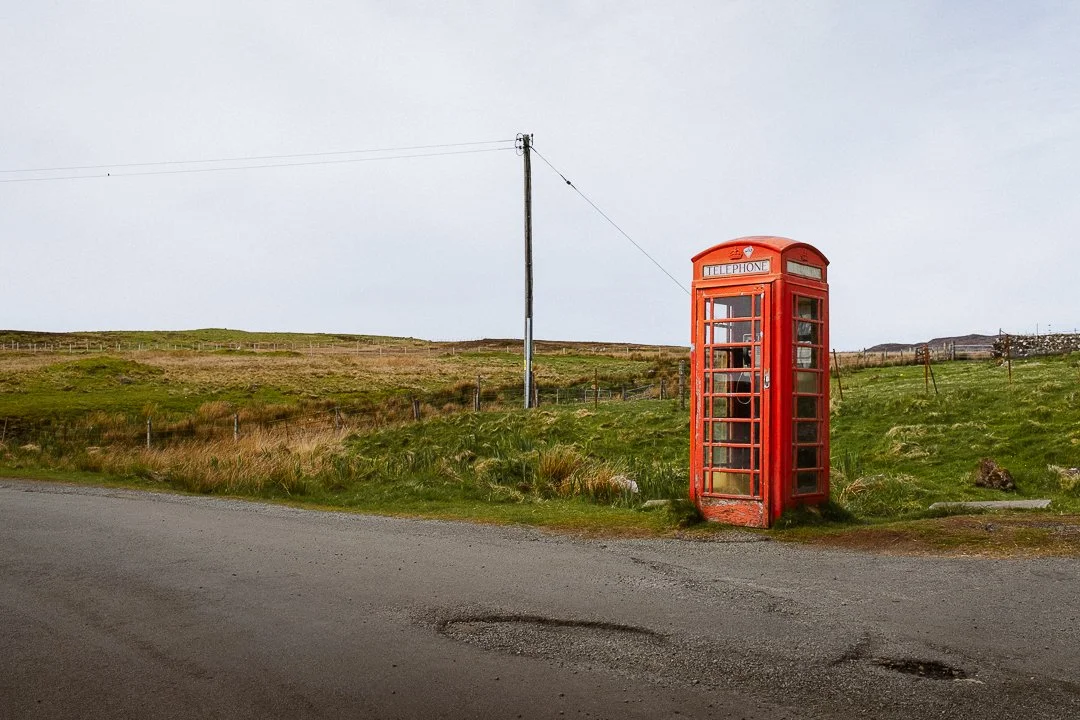
Getting to Scotland
There are essentially two direct ways of getting to Scotland: by plane or by ferry.
Flights to Edinburgh and Glasgow (as well as smaller airports like Aberdeen) are plentiful and often surprisingly cheap. I've flown with EasyJet twice, both times on ultra-budget flights from Amsterdam, and from what I've seen, it's a similar story from most European cities.
One important thing to remember before flying: you'll need a passport and an ETA (Electronic Travel Authorisation). The ETA is applied for online, costs £20, and gets linked directly to your passport. Once approved, it's valid for two years.
The second option is the ferry. Since our plan was to drive Scotland in our own car (which also happens to be where we eat and sleep), that's the route we chose. I booked a P&O ferry around December/January. The return crossing cost roughly €650, including the car and a two-person cabin.
As with most things in travel: the earlier you book, the cheaper it gets.
We sailed from Rotterdam to Hull, though there's also a ferry from IJmuiden to Newcastle. We chose Hull because it gave us the perfect excuse to drive through what I now consider some of England's most beautiful regions: Yorkshire Dales and the Lake District.
If you're travelling on a budget, stock up on food and drinks before boarding. Everything on the ferry is fairly expensive, and the food quality leaves a bit to be desired.
That said, the comfort of ferry travel is hard to beat. You board in the evening and wake up the next morning in England. Rested, showered, and ready to go, you roll off the ferry in Hull and within minutes you're heading north on the motorway.
Three or four hours later, you're crossing into Scotland.
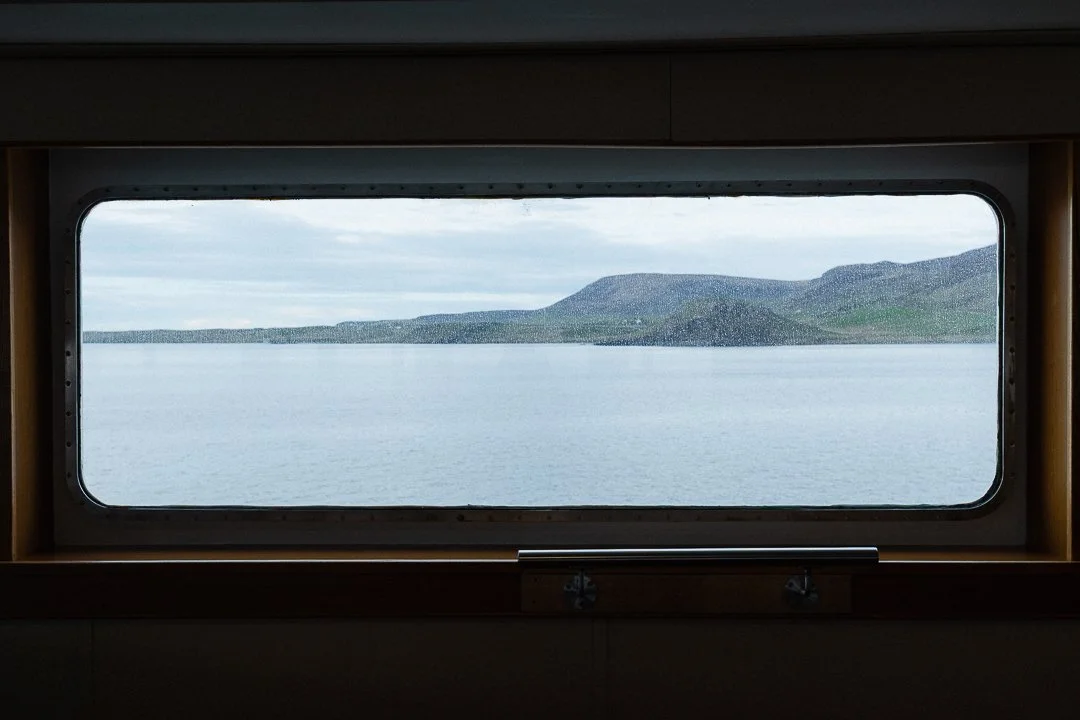
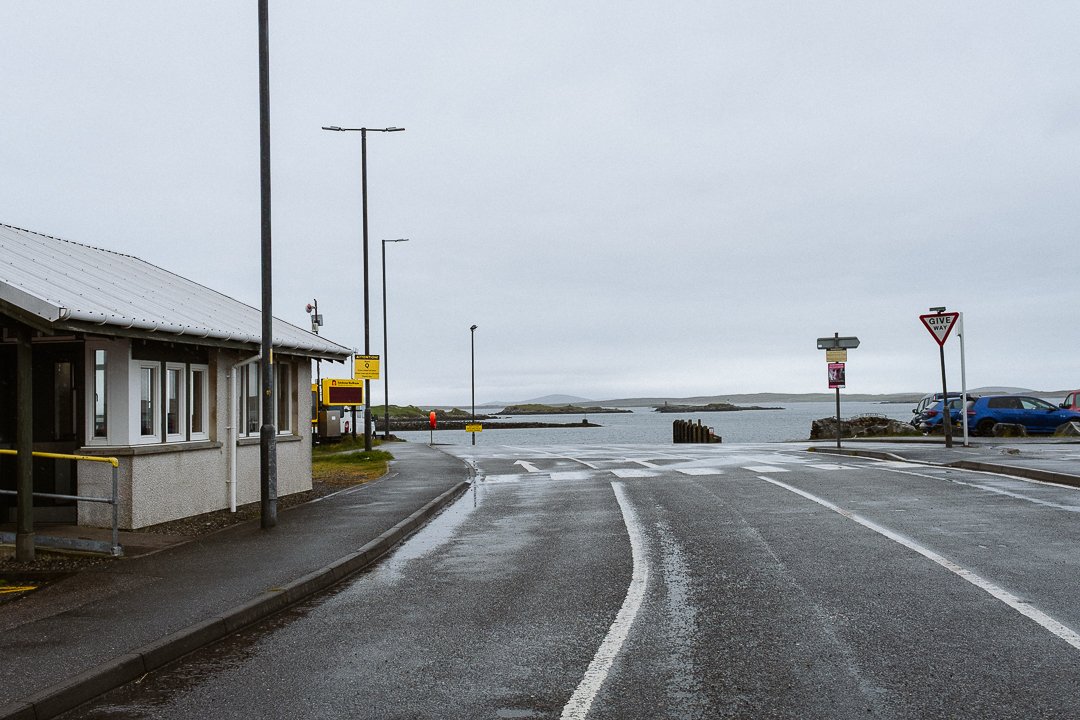
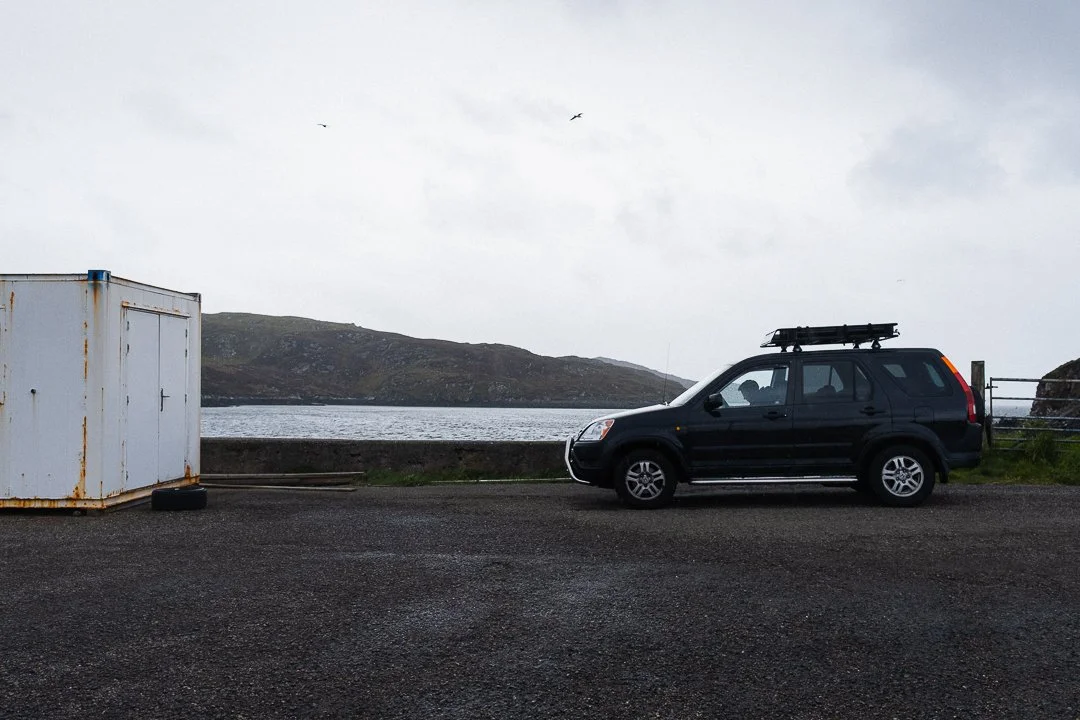
Getting Around Scotland
Yes, they drive on the left.
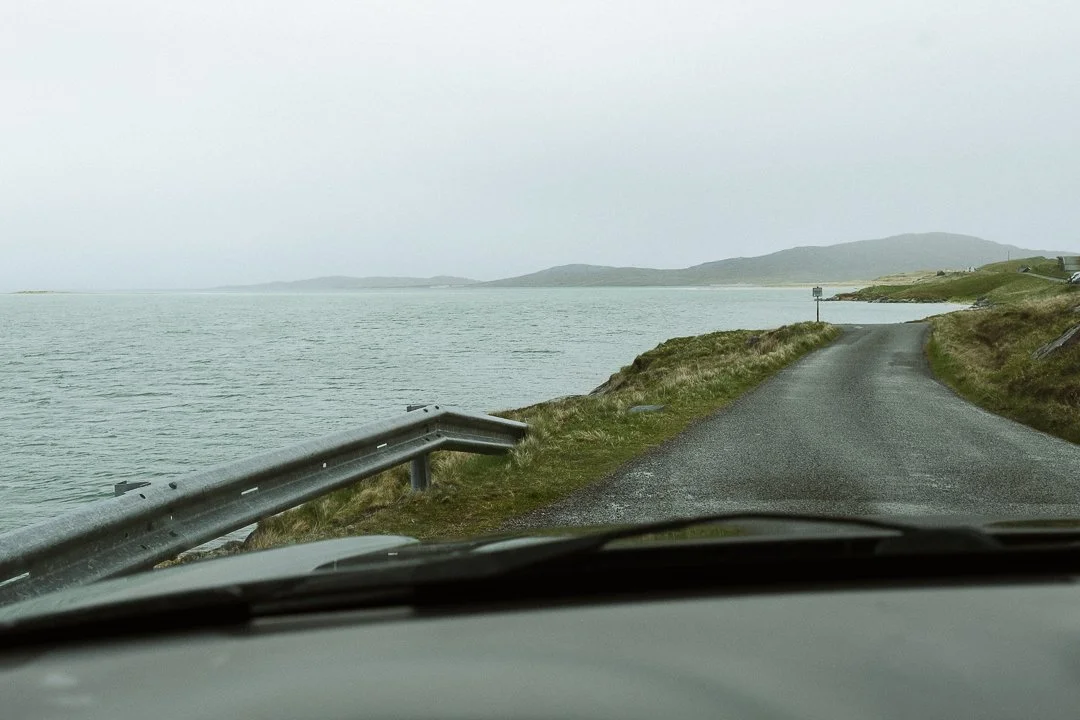
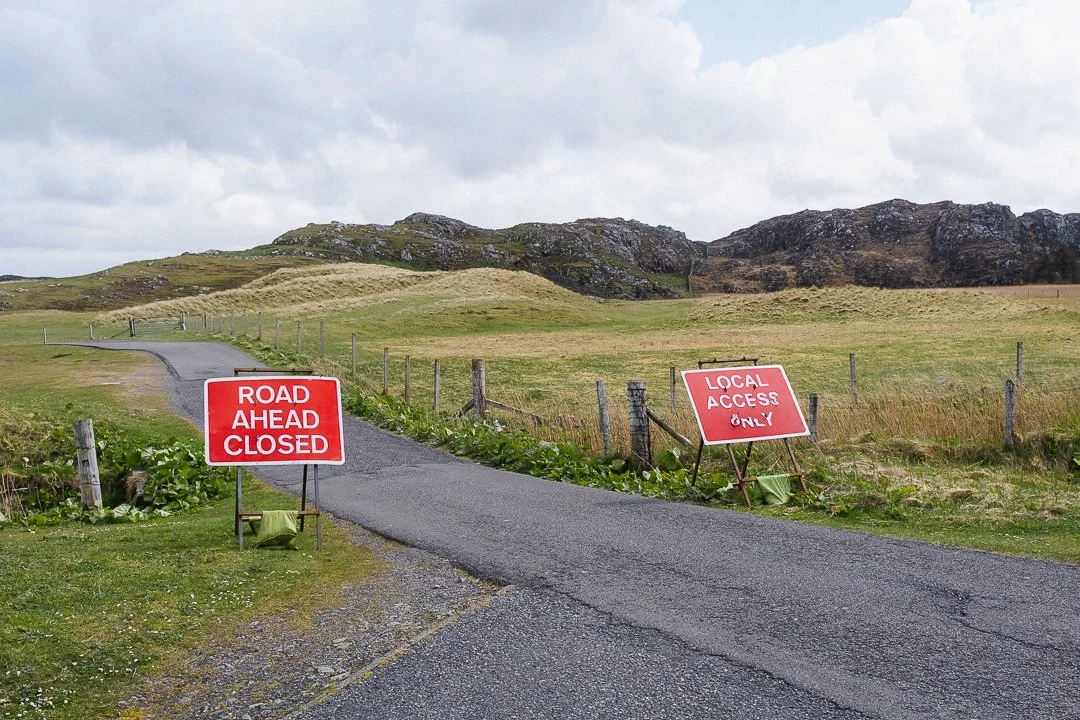
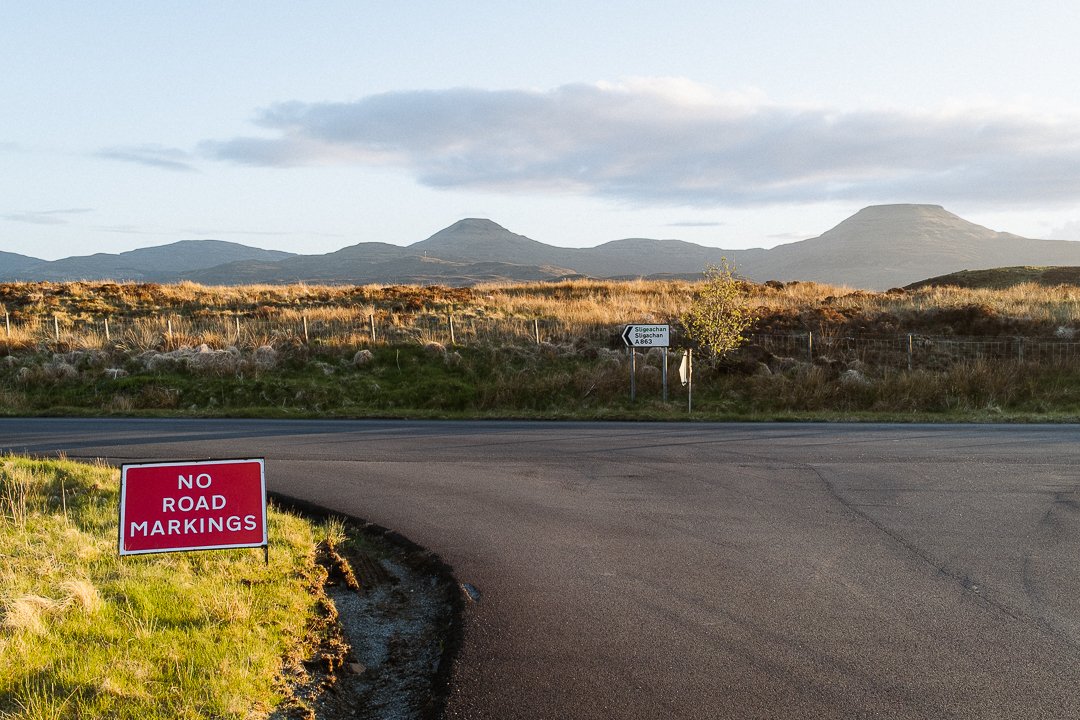
While that's obvious enough, there's another thing worth mentioning. Outside the main roads, many local roads are single-track roads wide enough for only one vehicle. Passing places are there for a reason, and under no circumstances should you park in them.
It sounds exciting at first, but you get used to left-side driving surprisingly quickly. Scots, and most visitors, for that matter, are incredibly relaxed and patient. People give each other time, space, and a friendly wave.
Scottish Ferries
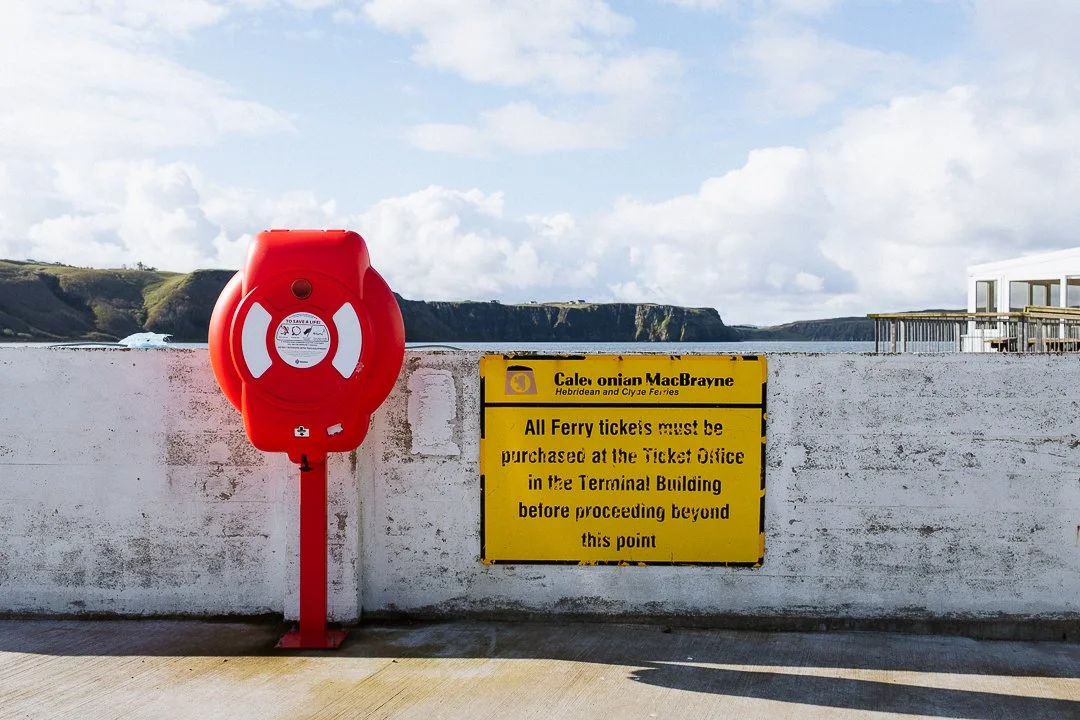
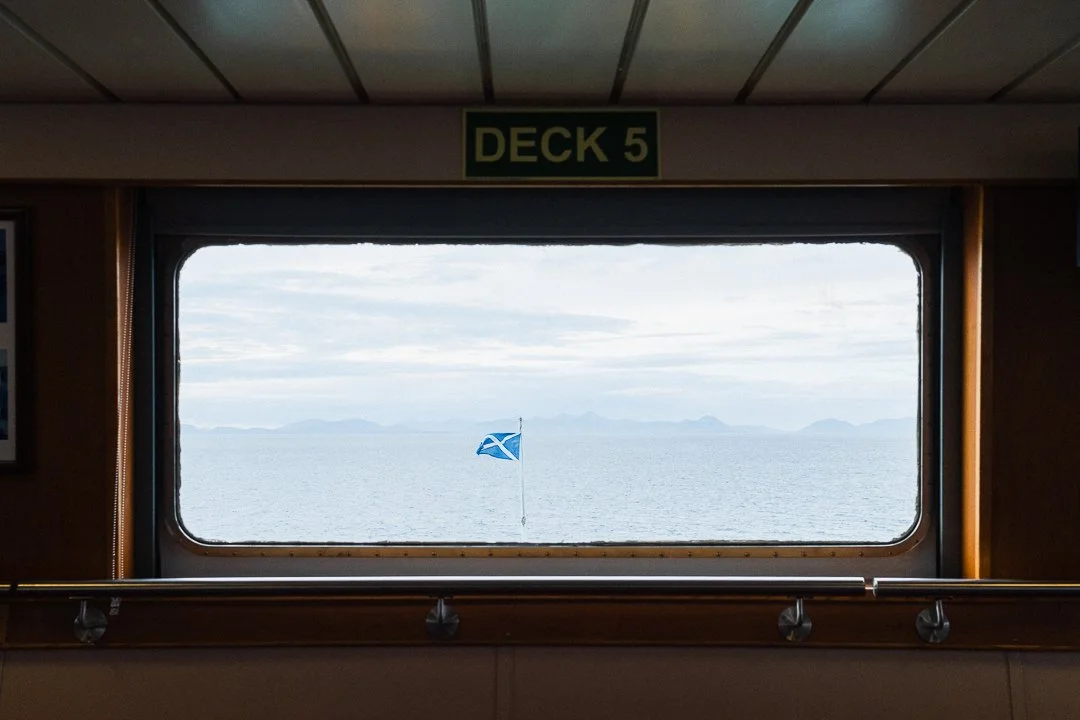
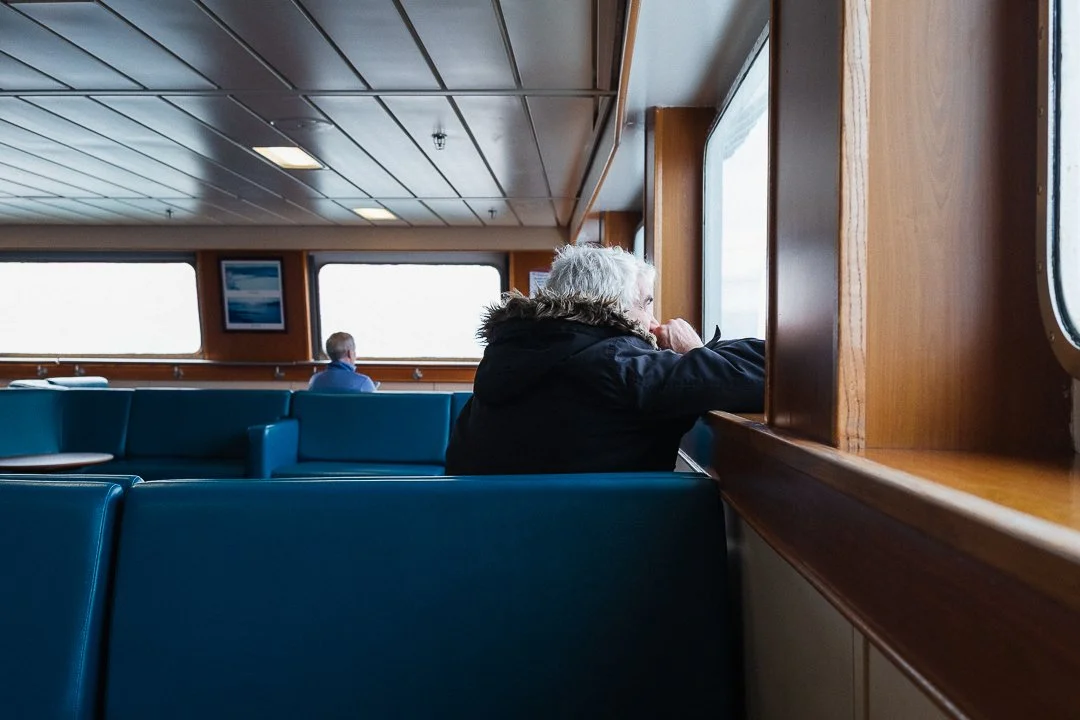
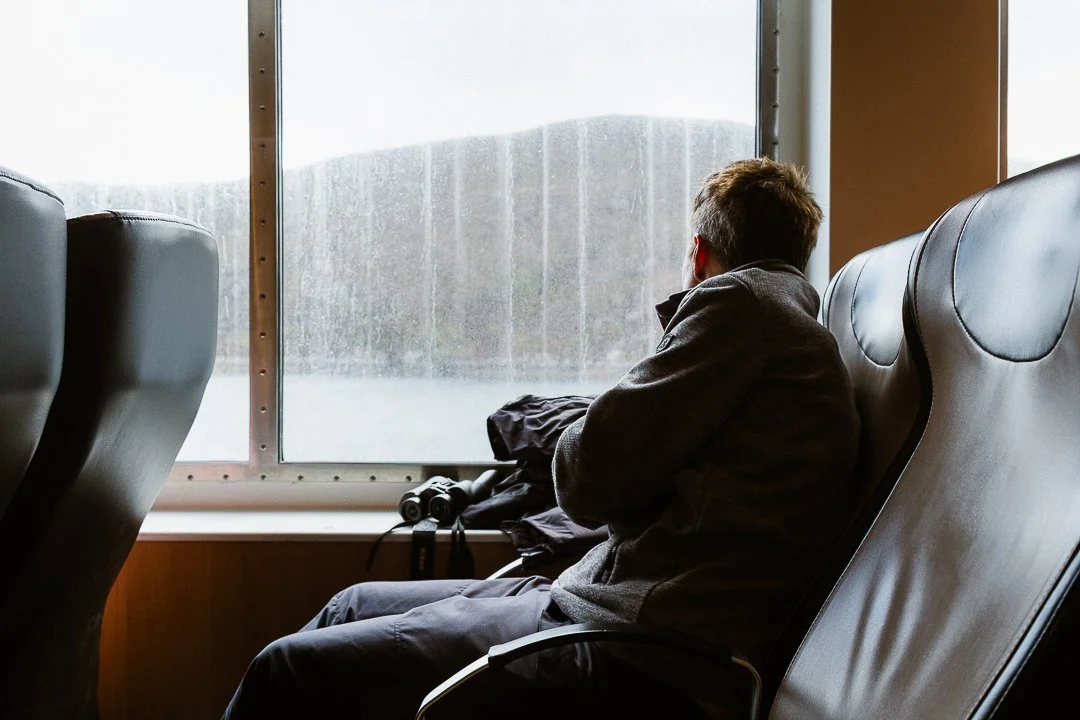
Scotland is a country of islands. Some are connected to the mainland by bridges, but many require a ferry crossing. Most of the major routes are operated by the company Caledonian MacBrayne.
It's worth booking ferry tickets well in advance, especially if you're travelling with a car and planning to visit the more popular islands. Demand can be enormous during the season.
Prices depend mostly on the route and time of year. The good news is that bookings are fairly flexible and can often be changed without additional fees, provided there is availability.
Another thing I appreciated is that you can book multiple ferry crossings in a single reservation, which makes planning island-hopping trips much easier.
On this trip, we sailed from Uig to Tarbert on Harris, then returned to the mainland from Stornoway on Lewis to Ullapool. Two ferry crossings for two people and a passenger car came to £153 in total.
Last year I took the shorter crossing from Mallaig to Armadale and paid around £60 for three people and a car. Different route, different story.
The smaller islands are often served by tiny local operators. If you're planning to visit places like Handa Island (where we went to see puffins), you'll usually need to do a bit of research online or simply ask around once you're there.
Trains Through the Highlands
If you're not travelling by car, one of the most enjoyable ways to see Scotland is by train.
The route from Edinburgh to Mallaig cuts straight through the Highlands and offers some of the best railway scenery I've experienced anywhere. The same rule applies here as with ferries and flights: the earlier you book, the less you'll pay.
In 2024, a return journey between Edinburgh and Fort William cost me around £85.
It's worth remembering that this isn't a high-speed railway. Diesel trains wind their way through mountain valleys and around lochs, so the journey takes more than five hours. But honestly, the views are the point.
The train also stops at Corrour, often described as the most remote railway station in the UK and known to many from Trainspotting. There are no roads leading there, rail is the only way in.
If you have the time, get off, walk around the loch, enjoy the silence, and catch the next train back. It's one of those places that feels completely detached from the rest of the world.
Renting a Car
Of course, there's always the option of renting a car after landing. That's what I did in 2025.
It works well, but it isn't exactly cheap. Once you factor in accommodation, which can be fairly expensive across much of Scotland the costs start adding up quickly.
Still, if you want complete freedom and don't have your own vehicle, it's probably the most practical solution.
Where to Sleep in Scotland
If you're road-tripping in your own car or camper, then the answer is obvious: under your own roof.
The good news is that Scotland offers no shortage of options. Campsites, farms, overnight parking spots, wild camping - there's something for every style of travel.
Campsites
We stayed at two campsites during this trip - one on Skye and another somewhere along the northern section of the NC500.
For some campsites, especially during the busier months, booking ahead is a good idea. In many cases, though, it's simply first come, first served.
Facilities tend to be fairly basic, but perfectly adequate. Expect showers, toilets, and the essentials like tap water refill. Prices generally range between £20 and £30 per night for two people and a vehicle.
Occasionally you'll need coins for hot water, so carrying some change isn't the worst idea.
Farm Stays and Overnight Parking
We didn't stay on any private land this time, at least not knowingly, but there are plenty of apps that help you find these spots, such as park4night and Brit Stops.
Landowners often offer overnight parking for self-sufficient travellers. Sometimes there's a fee, sometimes not. Sometimes you'll get access to a few basic facilities, sometimes you'll simply get a beautiful place to spend the night.
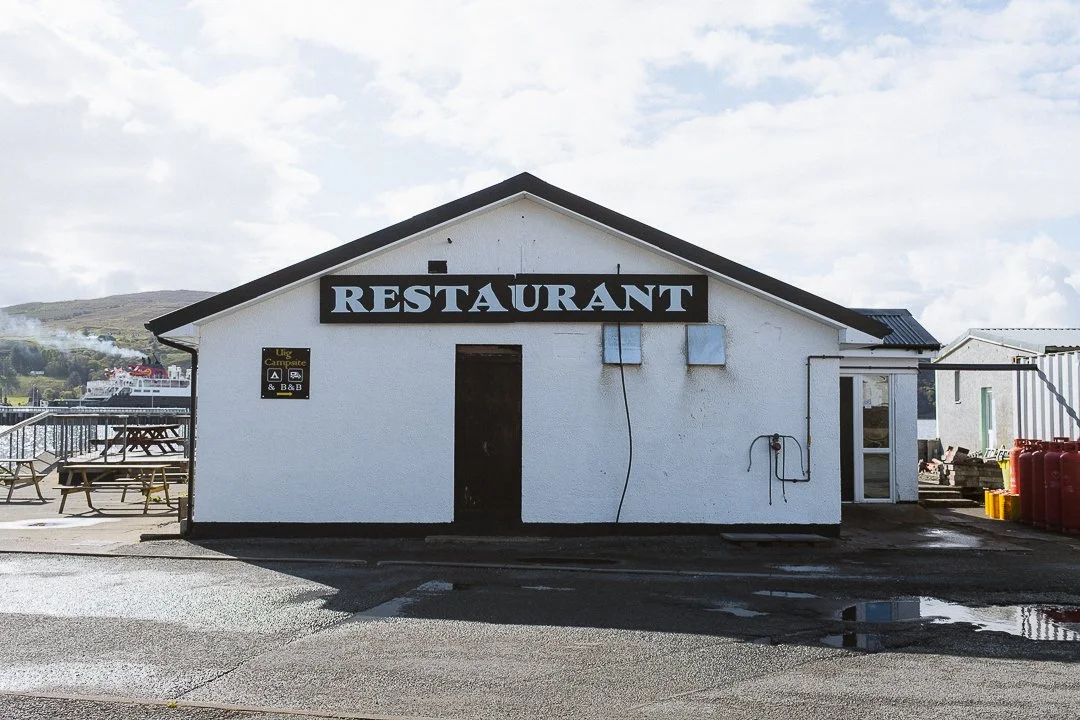
Across the UK, many pubs and restaurants also welcome overnight stays if you have dinner there. The expectation is usually that you're self-contained and not relying on their facilities, but overall it feels like a very fair arrangement for everyone involved.
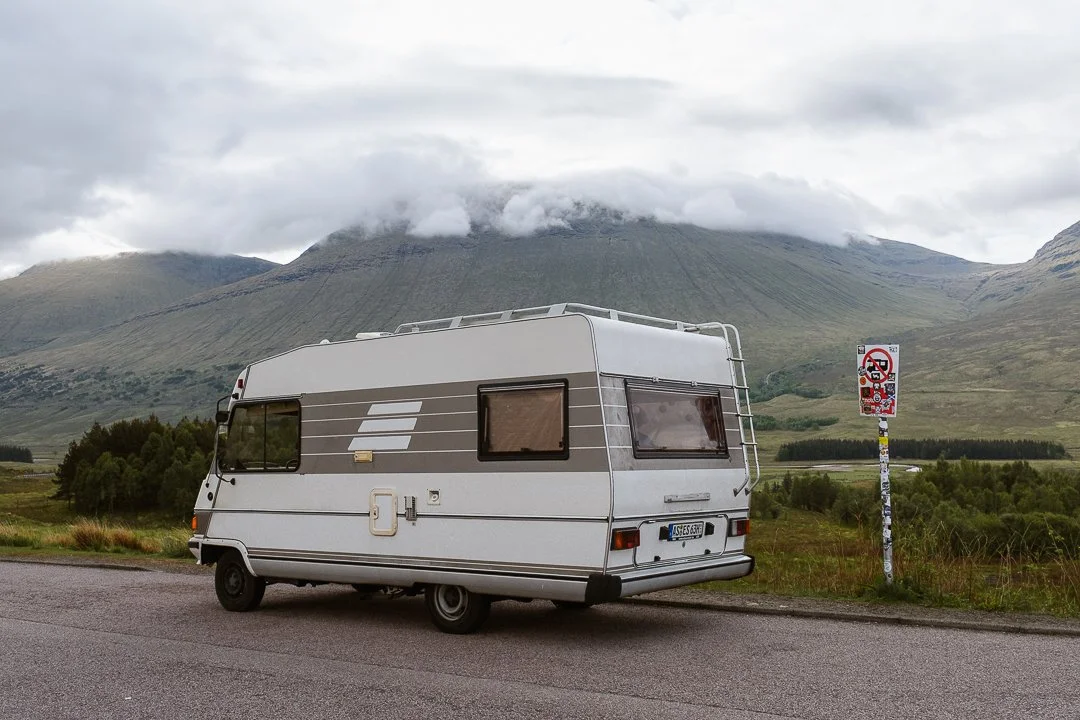
Wild Camping and Sleeping in Your Vehicle
When it comes to wild camping, I'd like to clear up a common misconception.
Scotland's right-to-roam culture means that wild camping is generally allowed, much like in Scandinavia. It's one of the many reasons it's hard not to love this country.
But , and this is important, the rules primarily apply to tents.
You can pitch a tent almost anywhere, provided there are no local restrictions. Just remember the basics: don't stay more than a night or two in the same place, don't camp right next to someone's home, and leave absolutely no trace behind.
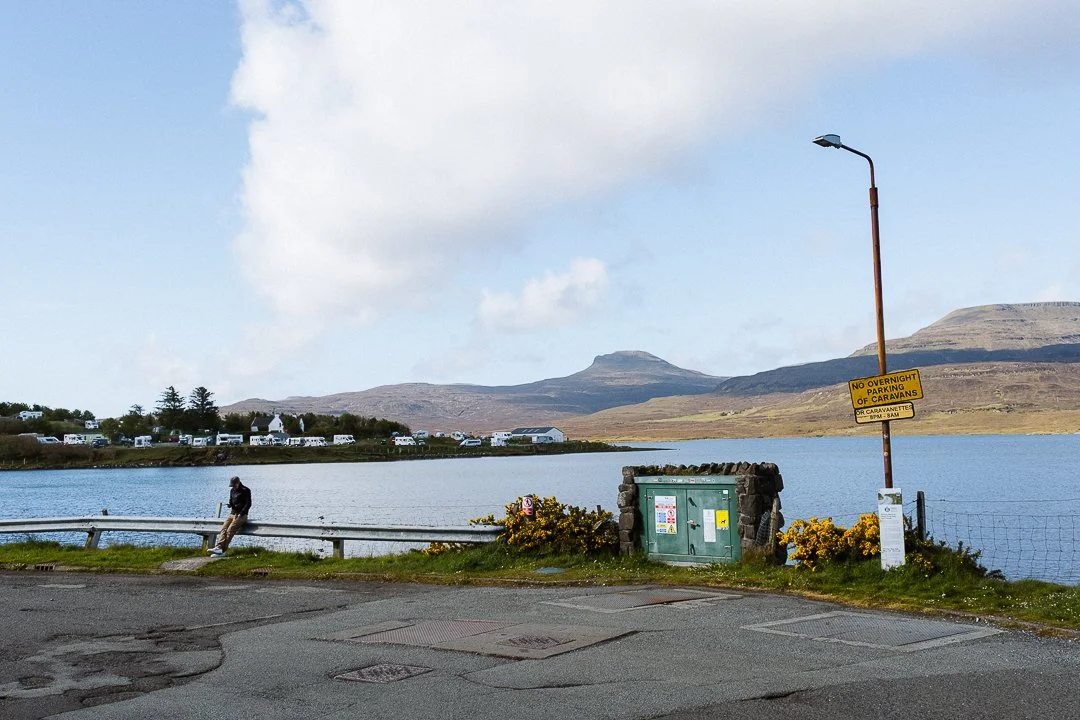
Cars, campervans and motorhomes exist in a slightly greyer area. There are official overnight parking spots all over Scotland, some with specific rules attached - such as being limited to self-contained vehicles or requiring you to move on in the morning.
Some of these places offer toilets, showers, and even bad-weather shelters. We came across several on Harris. Usually, a small fee or donation is all that's required, and many are located right next to beaches, hiking trails, and other remarkable places.
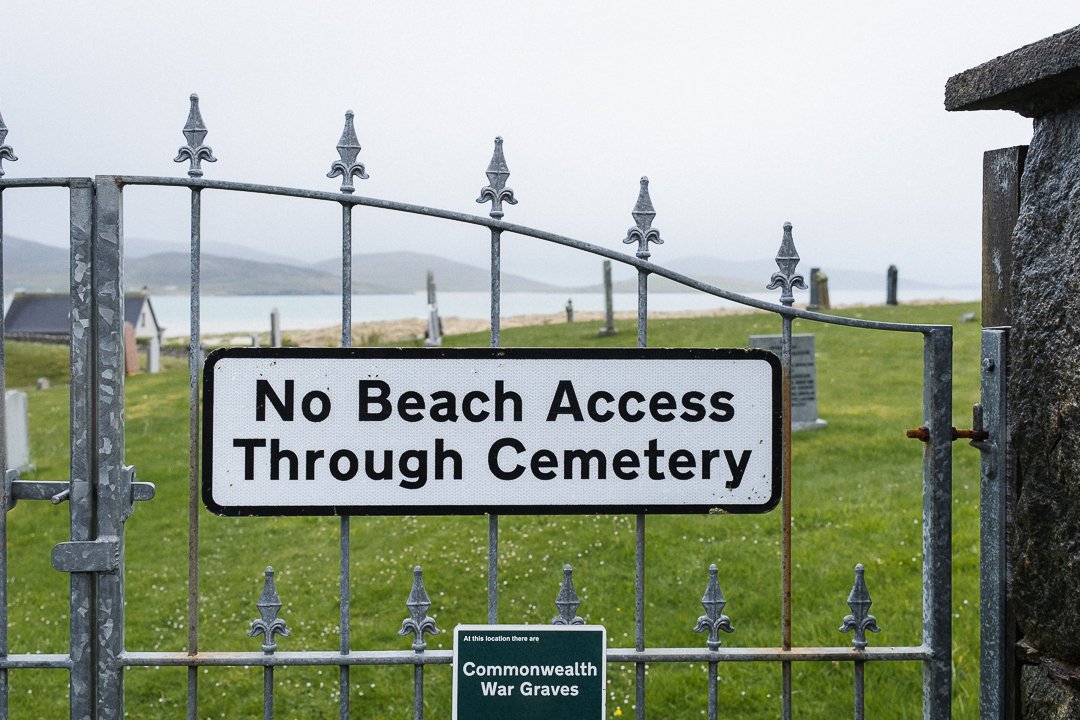
There are also places where overnight parking is strictly prohibited - near cemeteries, historical sites, or on private land, for example.
As for sleeping in places that aren't officially designated but aren't explicitly forbidden either, there are countless possibilities, provided you're simply sleeping in your vehicle rather than setting up camp.
The key is common sense. Don't block passing places. Don't build a campsite around your vehicle.
Rangers had no issue with us sitting outside in our camping chairs, but they did explain that rooftop tents or any significant extension of the vehicle are generally viewed as camping and not allowed.
And above all: leave no trace and leave a good impression.
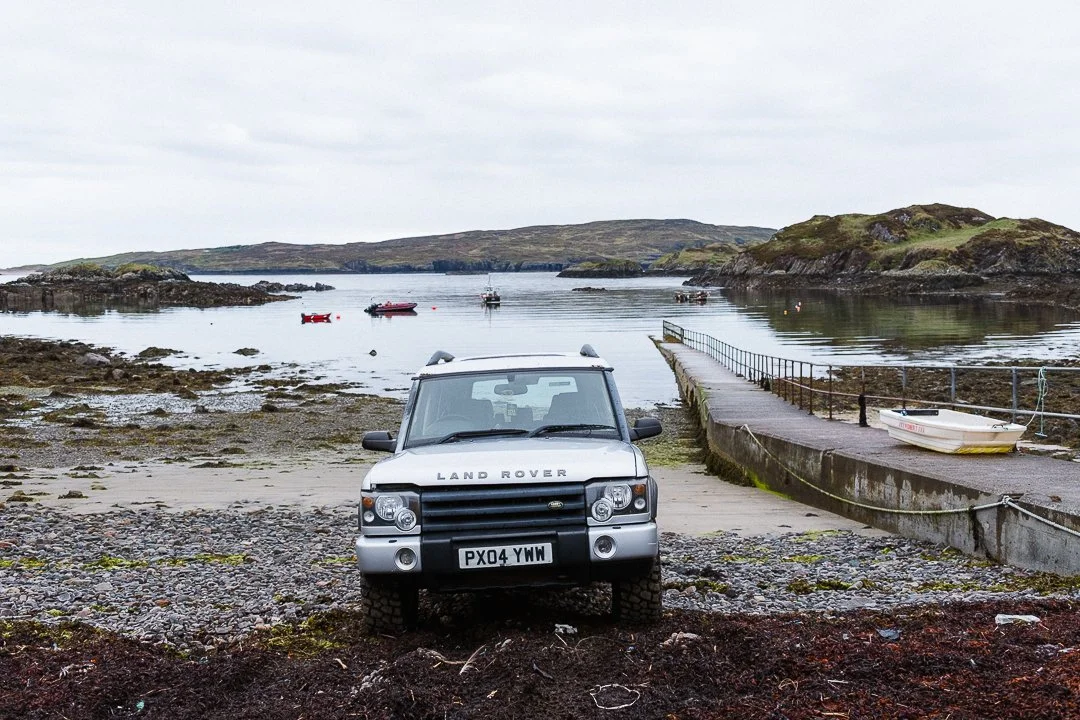
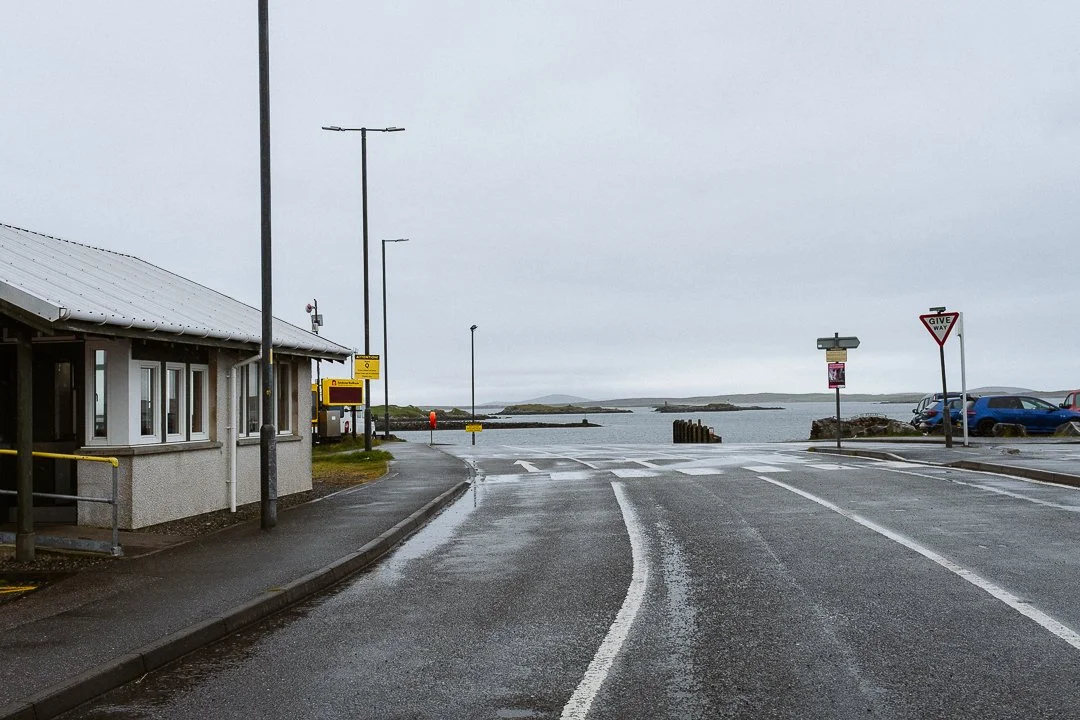
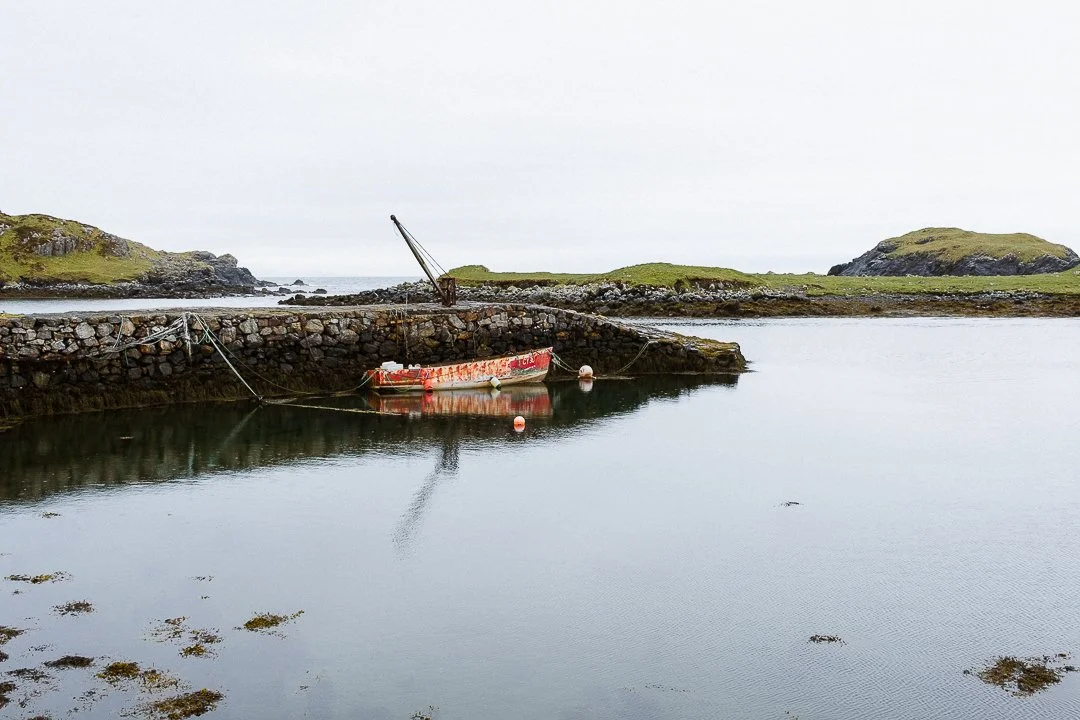
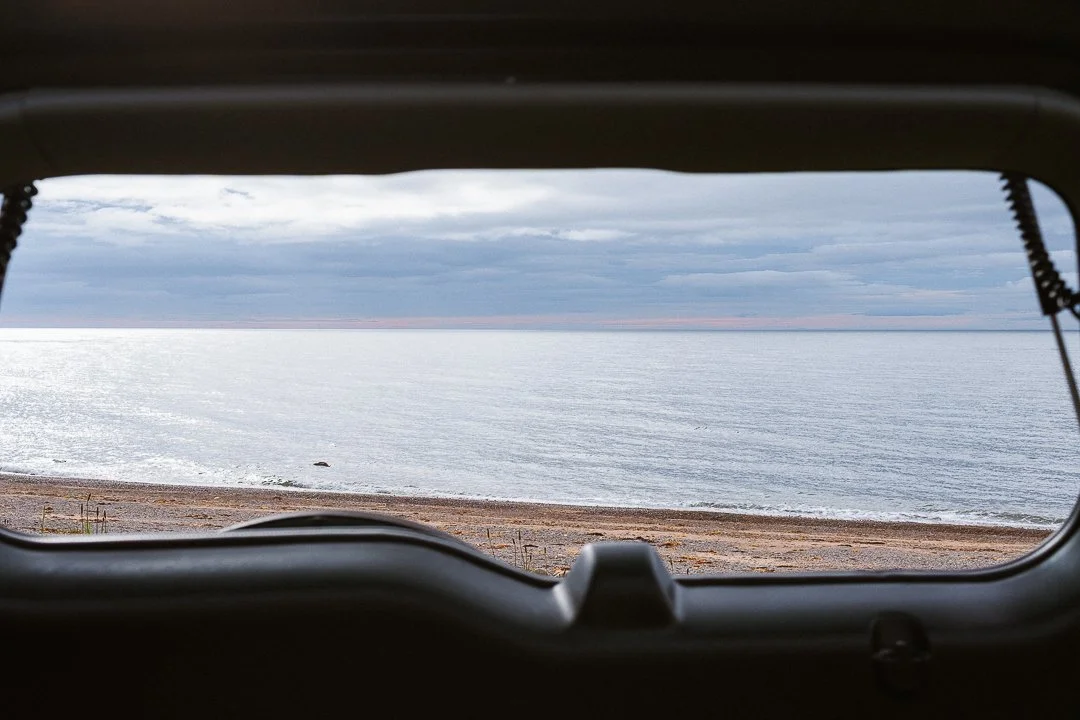
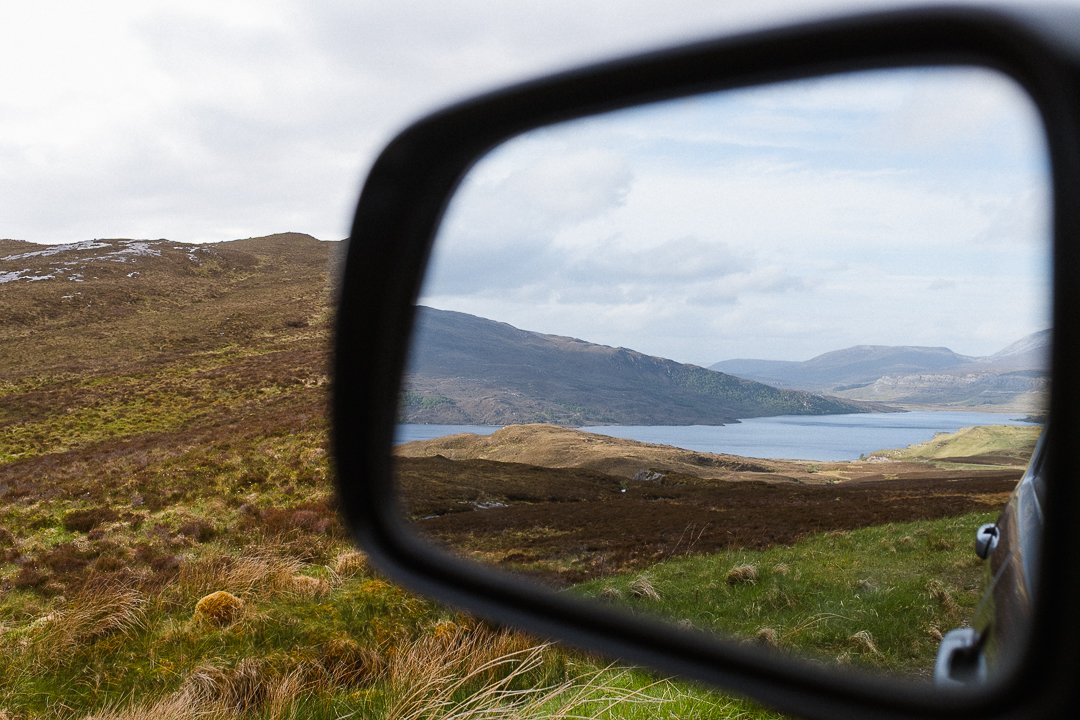
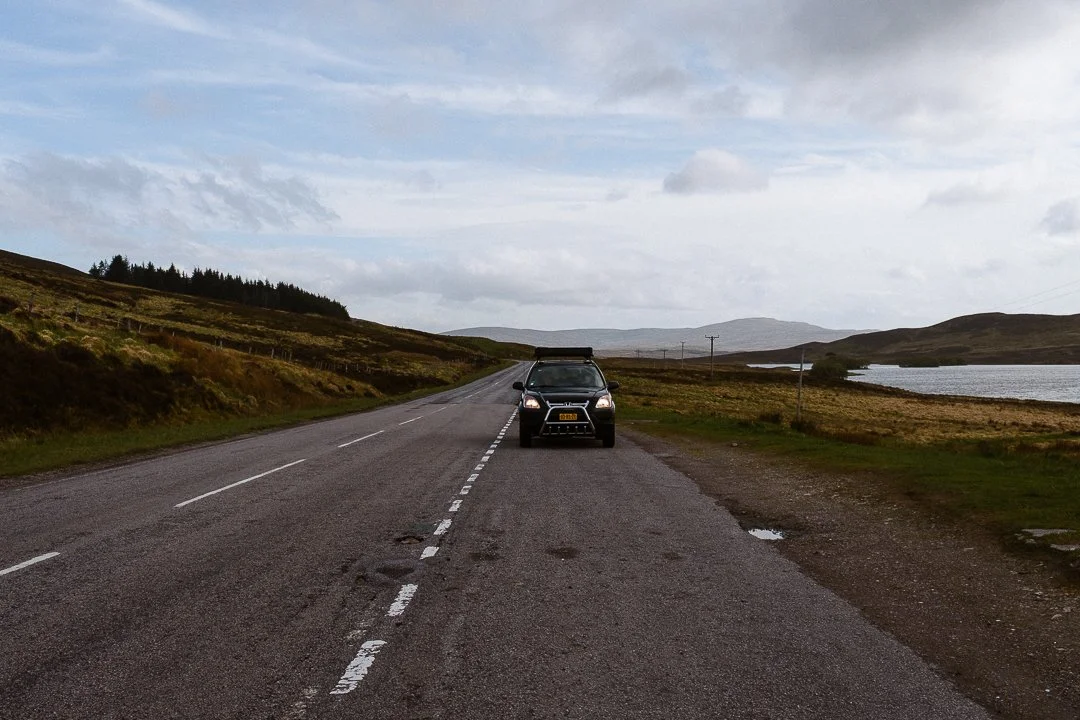
Following those simple principles allowed us to spend nights in places I won't forget anytime soon: twice in the beautiful Glen Etive valley, in a tiny fishing harbour on Skye, directly on a beach along the NC500, and with views over mountains, lochs, the Hebrides, and the beautiful sands of Luskentyre. Just to name a few.
Taking Care of the Basics on a Road Trip
Things like finding a toilet, taking a shower, or doing laundry can make or break a road trip - especially if you're travelling light and spending weeks on the road.
Fortunately, Scotland won't let it break your trip.
Our car is equipped with water tanks for washing, cooking, and drinking, but that's about where the luxury ends.
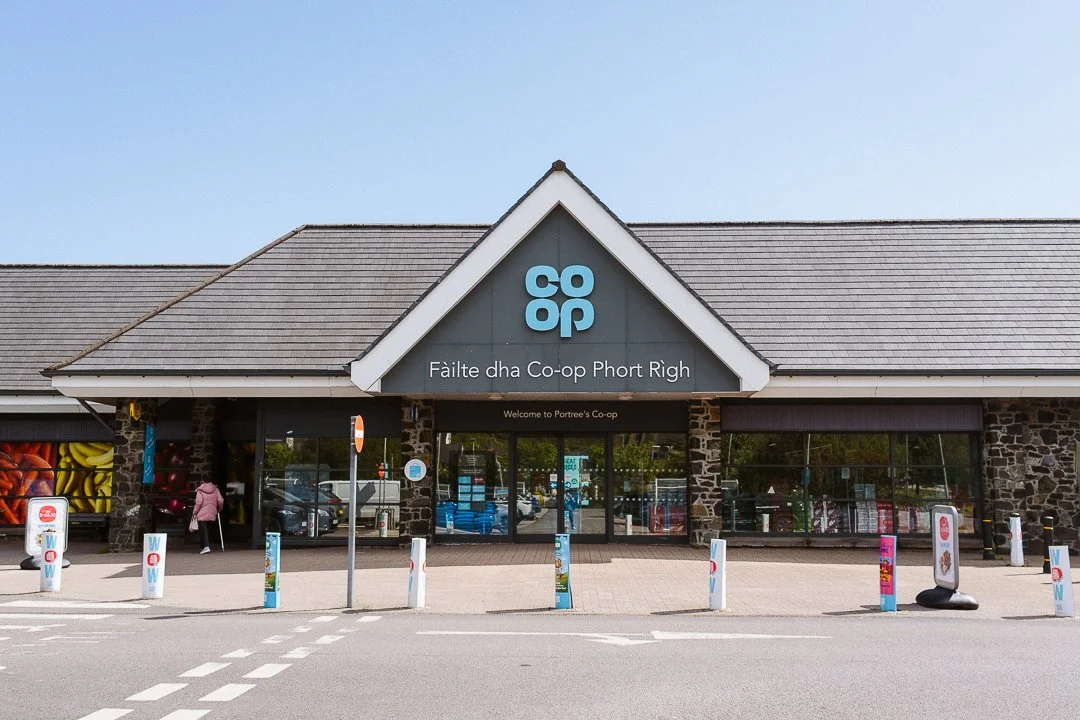
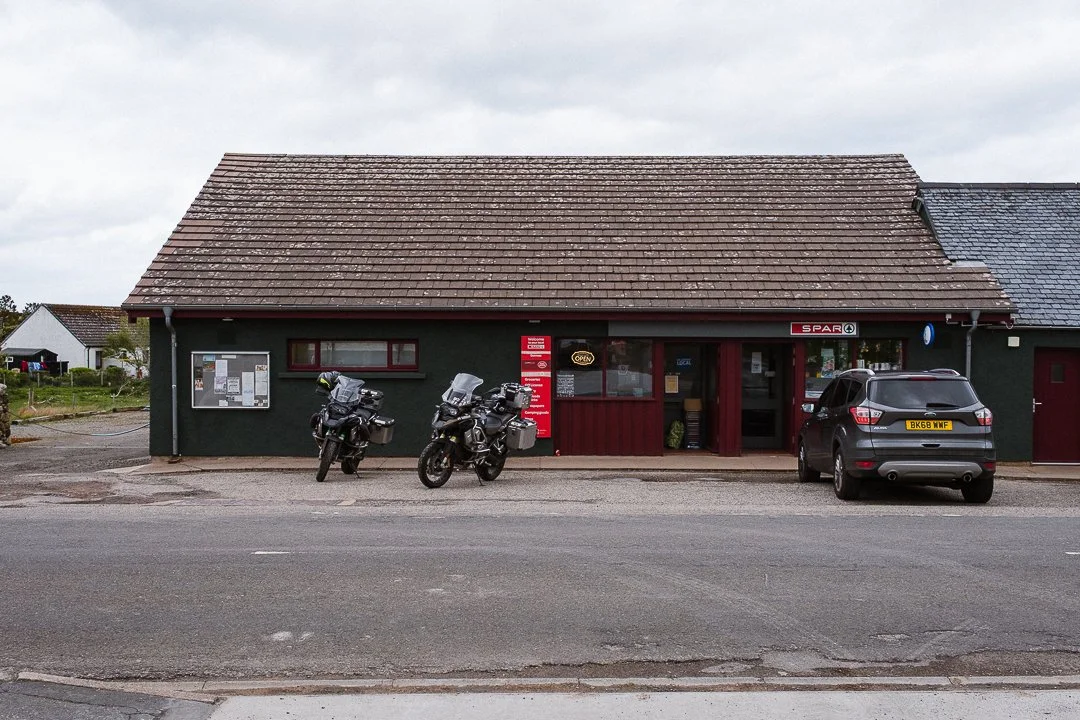
Thankfully, almost every town and village seems to have public toilets. Not only are they generally clean, stocked with soap and toilet paper, but most of them are free as well.
Finding a shower on the road requires little more than an internet connection or asking a local. We used showers at public swimming pools, local gyms, and campsites, usually paying somewhere between 50p and £4.
Sometimes that also included access to a sauna or a swim, which felt like a bargain after a long day outdoors.
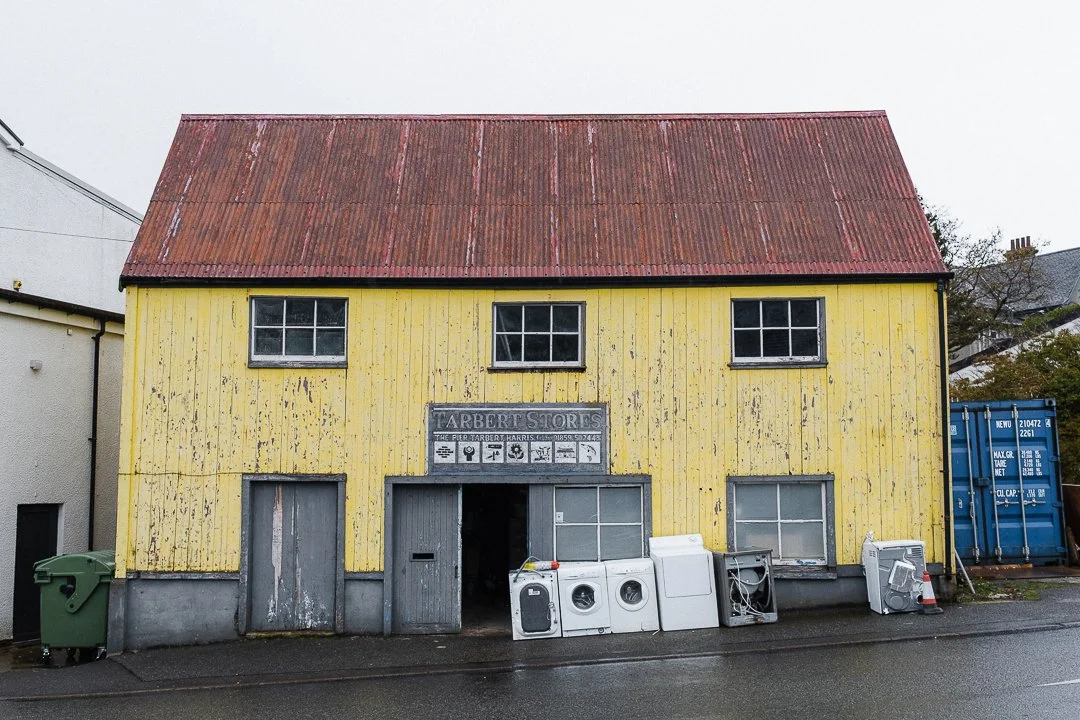
Laundry is equally straightforward. Most larger towns have public laundrettes. Just remember to carry some coins and your own detergent.
Food on the Road
Our car has a kitchen, but it's an outdoor kitchen, which means Scottish weather occasionally gets the final say in whether dinner happens as planned.
There were days when peanut butter and jam sandwiches kept us alive. There may even have been a day powered almost entirely by biscuits.
But generally speaking, finding food was never a problem - and that's coming from people who eat vegan 99% of the time.
One thing Scotland does remarkably well is vegan food. Almost every café, pub, or restaurant seems to have at least a few thoughtful plant-based options on the menu.
If you're interested in local classics, don't skip a Full Scottish Breakfast (vegan or otherwise), chips with vinegar, and scones.
I have to admit that we made an exception to our usual rules for the latter, and the best ones we found came from a small place called Croft 36 on Harris.
If you're cooking for yourself and have specific dietary needs, it's worth stocking up while passing through larger towns where you'll find proper supermarkets.
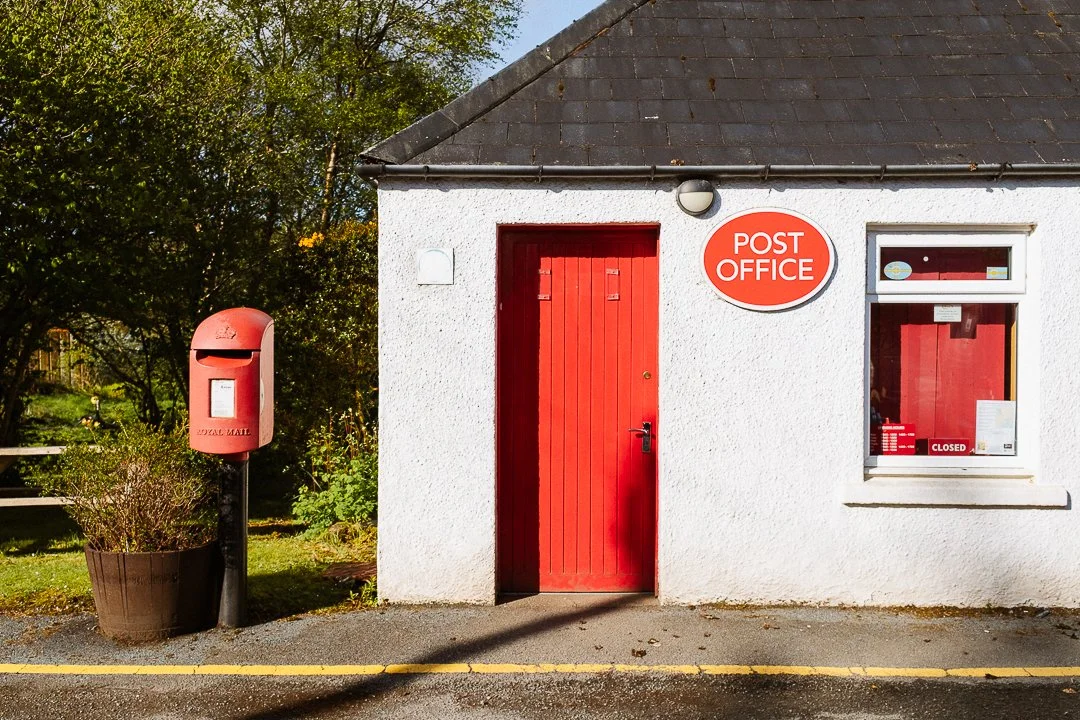
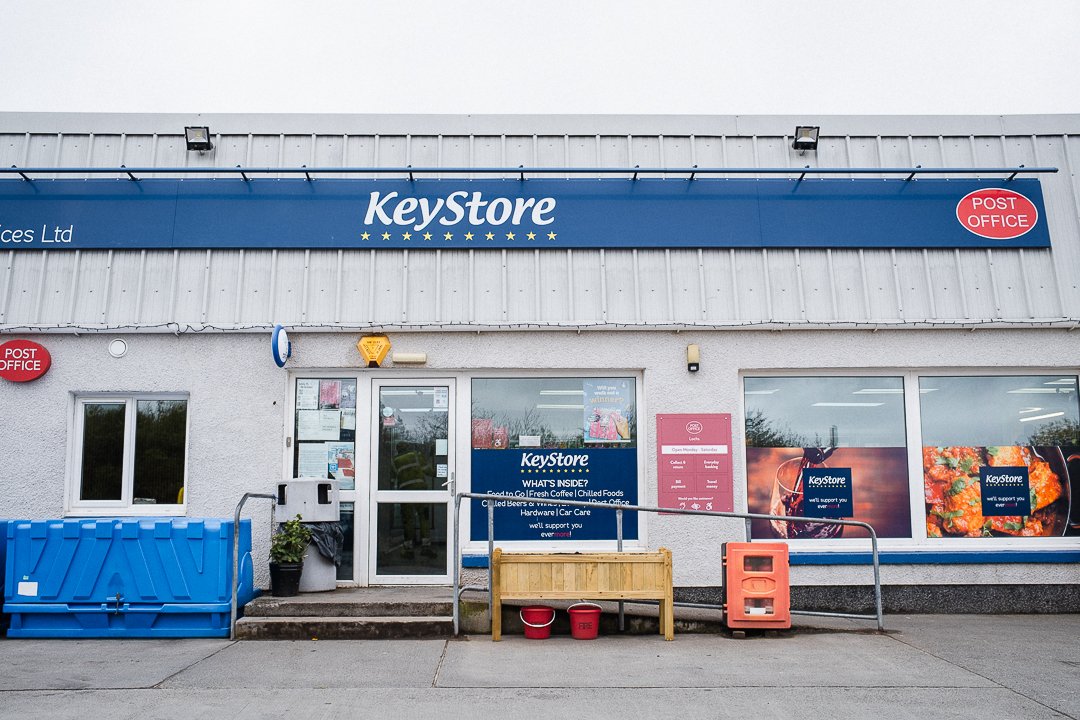
That said, I always recommend stopping at the small village grocery stores too. You'll mostly find the essentials but every purchase helps support local businesses.
Along the roadside you'll often come across something called an "honesty box": a small stand filled with local produce, baked goods, eggs, jams, and all sorts of homemade treats.
You simply take what you'd like and leave payment in a box nearby.
It's difficult to imagine a more direct way of supporting local communities.
During our drive across Scotland we also stumbled upon dozens of tiny galleries showcasing local artists and makers.
If you want your travel budget to stay in the communities you're visiting, consider picking up a print, a painting, or a handmade object instead of another generic souvenir.
And if you're into the sea and coastal landscapes, I'd highly recommend stopping by the gallery of Margaret Soraya on Harris. I first discovered her work through a conversation with Sean Tucker on YouTube.
Meeting her in person and exchanging a few words felt like a nice full-circle moment.
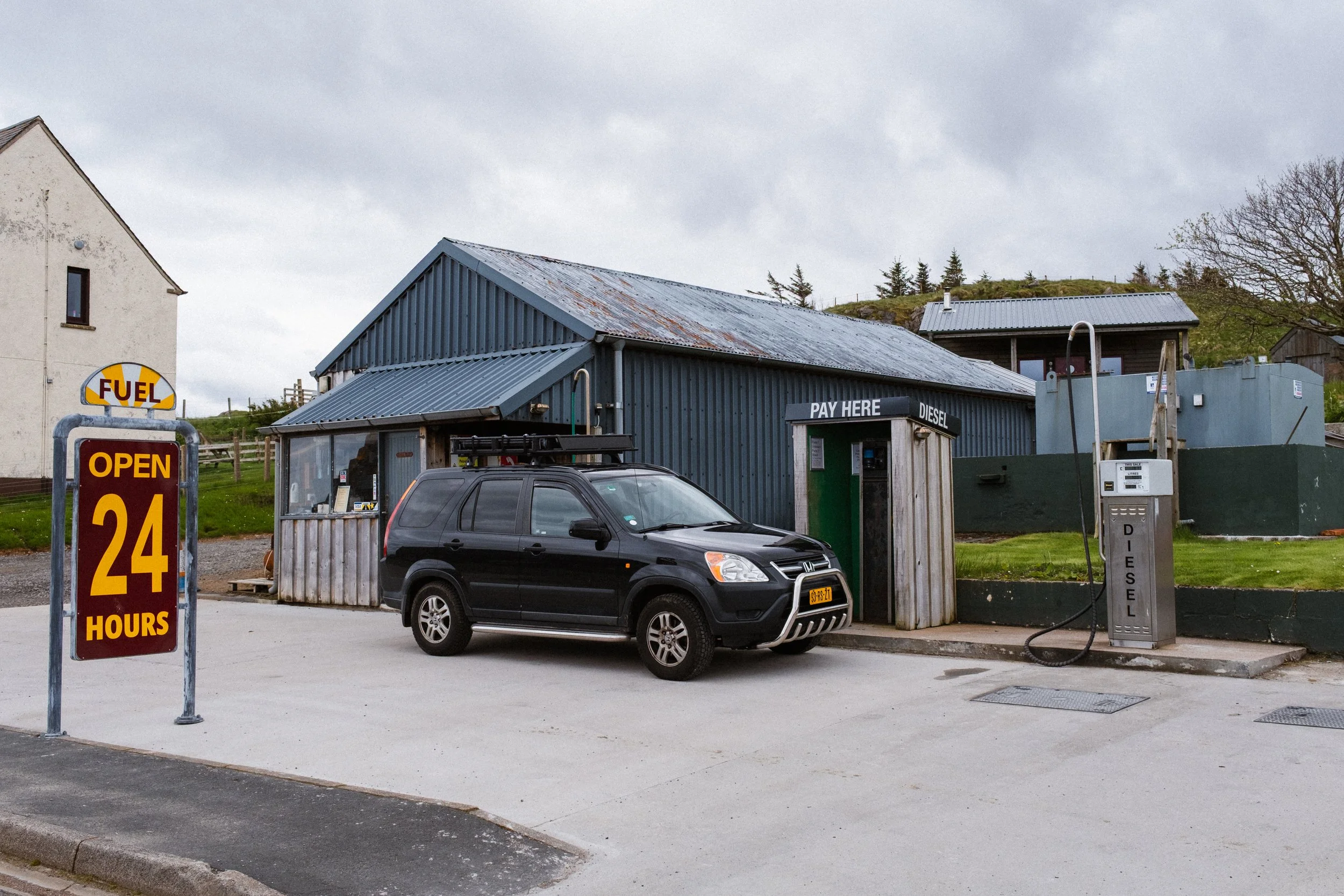
Fuel Stops and Roadside Discoveries
Before leaving for Scotland, I'd read countless warnings claiming that if you're driving the North Coast 500, you should fill up every single time you see a petrol station because there are so few of them.
In reality, I think that turned out to be a bit of a myth.
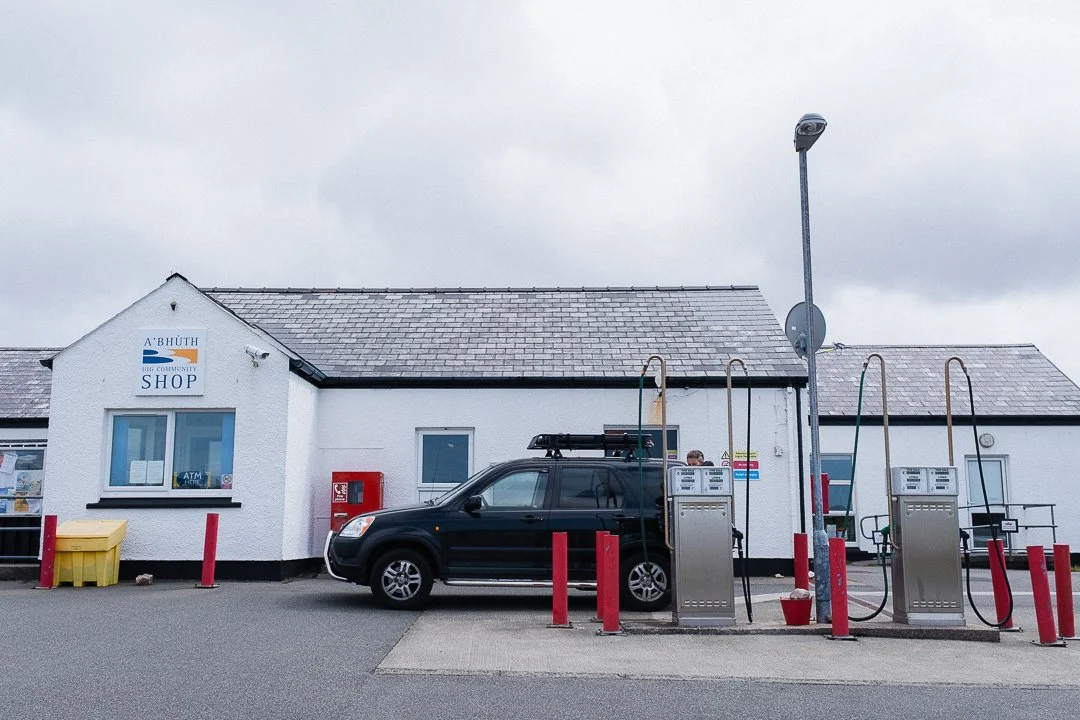
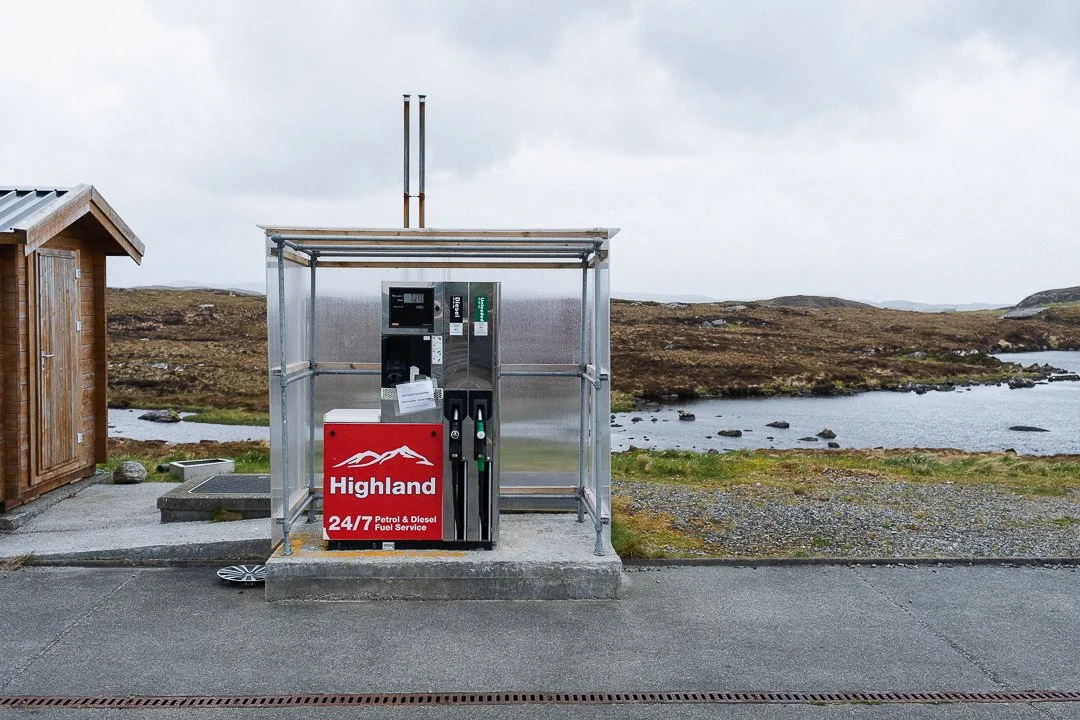
Whether on Skye, Harris, Lewis, or along the NC500 itself, we came across plenty of filling stations.
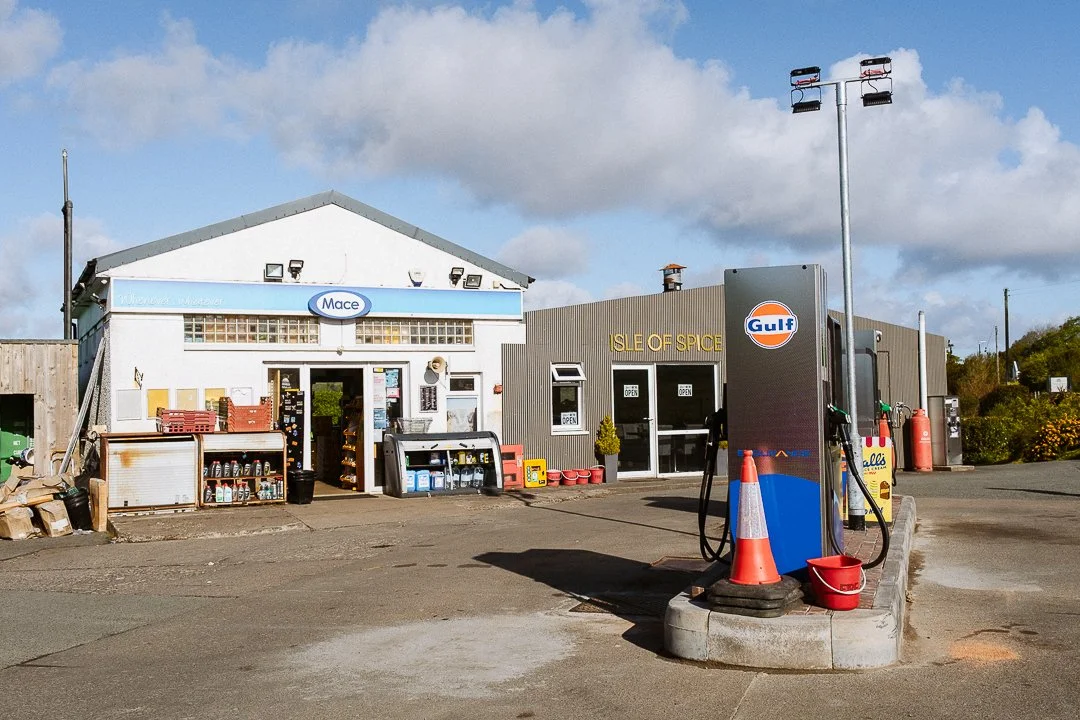
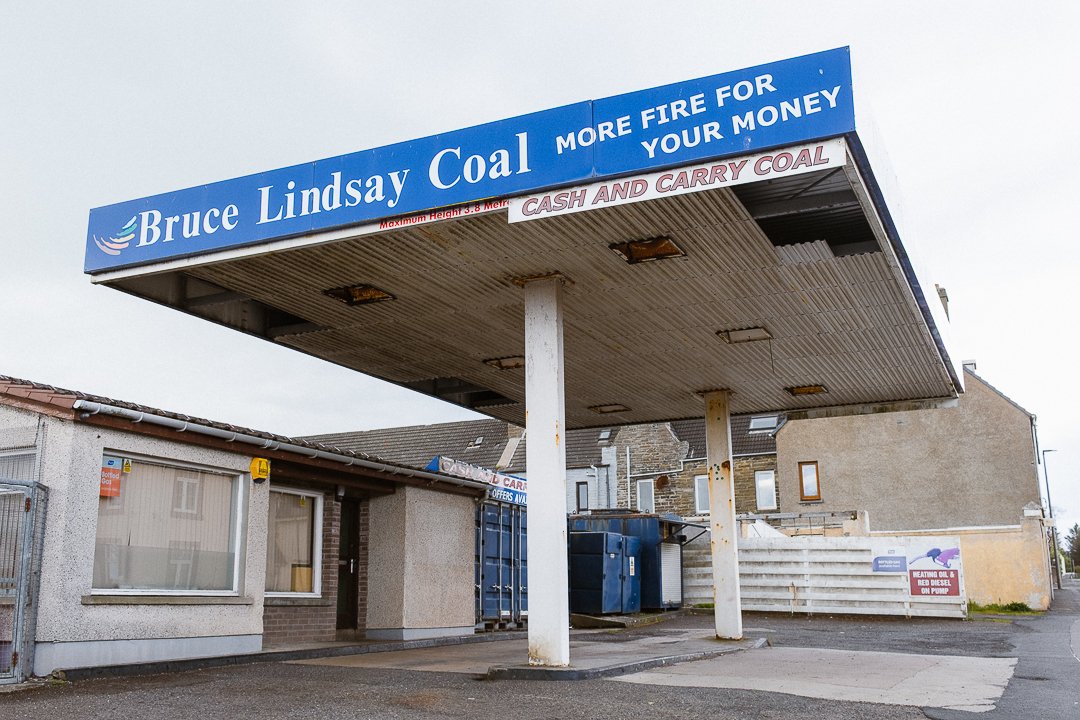
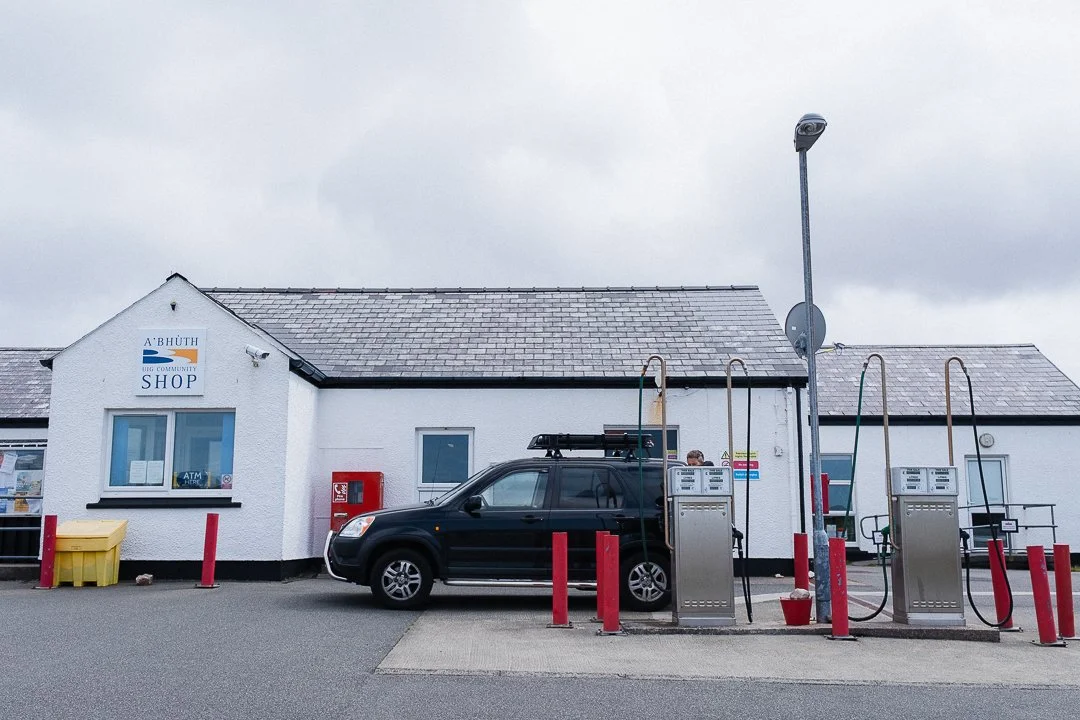
They're often easy to miss, though, because many are small, independent businesses rather than the large chains we're used to seeing elsewhere.
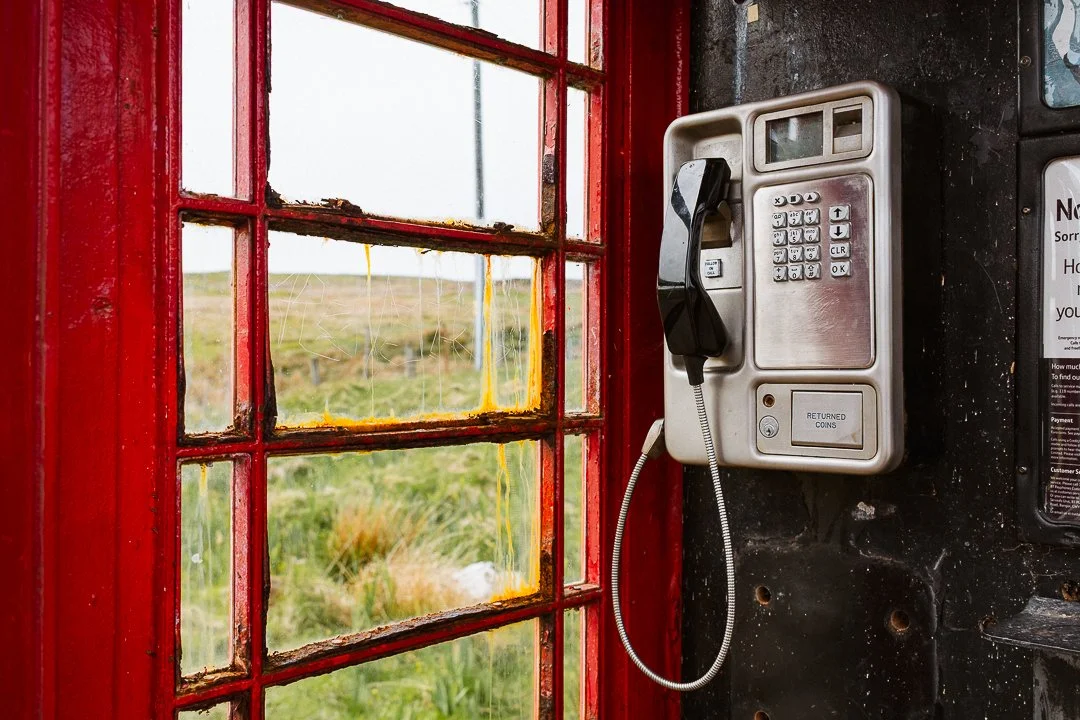
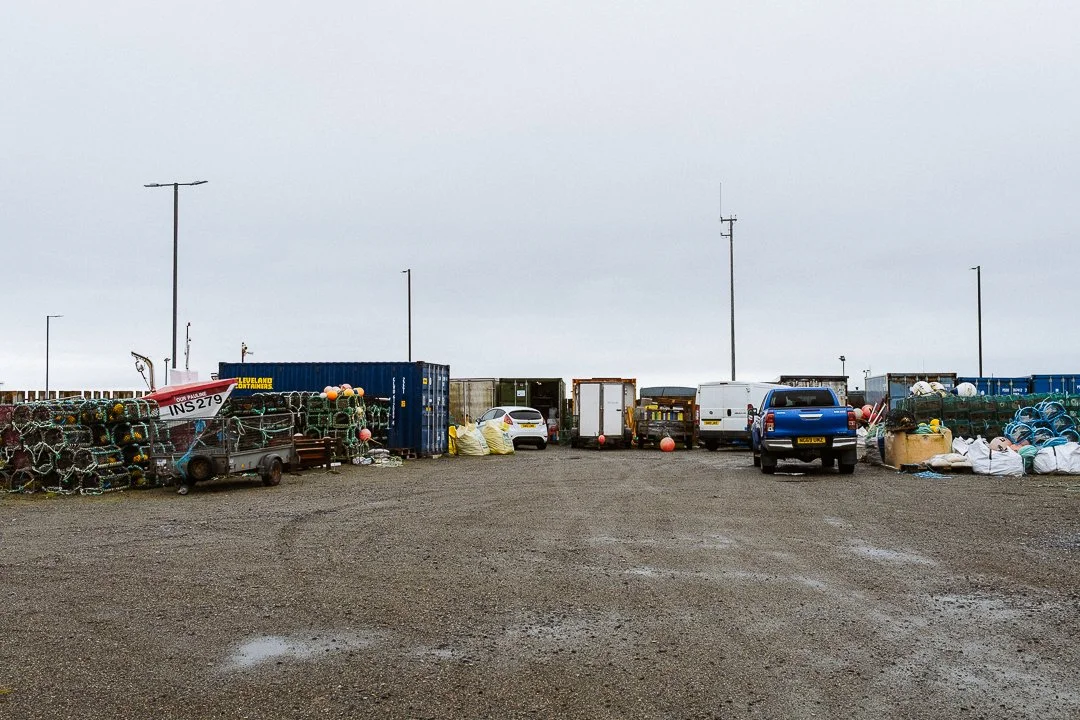
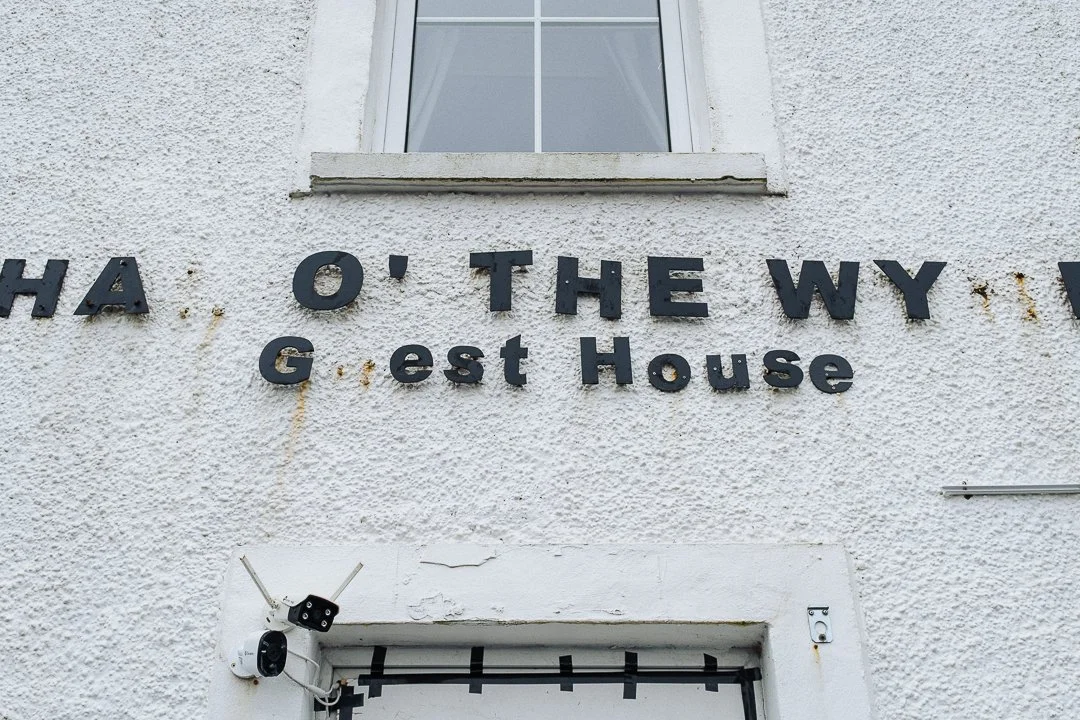
As a side note, those tiny rural petrol stations deserve a photography project of their own. In fact, somewhere along the trip, I accidentally started one.
Things Worth Bringing on a Scottish Road Trip
The stories about midges are definitely not a myth though. If you're visiting during midge season, come prepared.
We got lucky in an unlucky sort of way. The weather during much of our trip wasn't particularly kind.
There were nights when we woke up to frost on the windows, several days of rain and strong winds, and those aren't exactly ideal conditions for tiny bloodthirsty insects.
The midges eventually appeared during the final days of our trip, but in such small numbers that the head nets and window screens weren’t even needed.
Speaking of weather, the cliché is true: Scotland can absolutely give you four seasons in a single day.
Waterproof shoes, a proper rain jacket, and several warm layers should be considered the bare minimum.
But don't forget lighter clothes either. Scotland has a habit of surprising you when you least expect it.
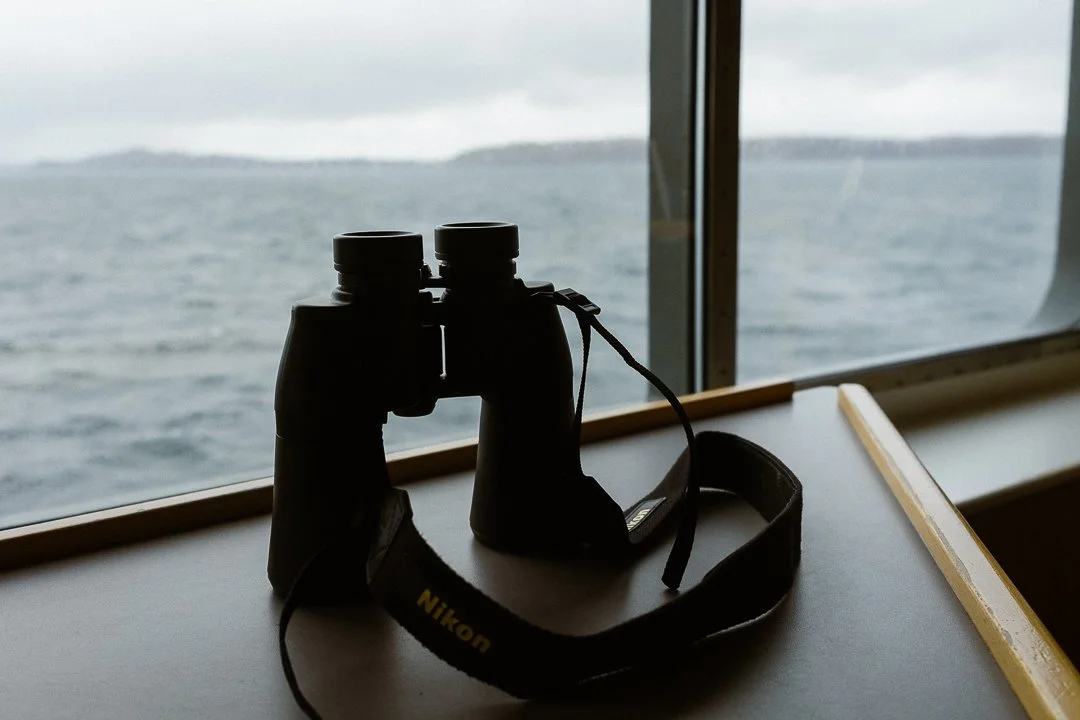
As for gear, if you enjoy wildlife or simply like paying attention to your surroundings, bring binoculars.
You can rent them in some places, but not on ferries - and ferry crossings are often your best chance of spotting dolphins, seabirds, and puffins.
What Photography Gear to Bring to Scotland
When it comes to camera gear, bring whatever works for you. There isn't a single correct answer.
For this trip, I had convinced myself that my Fujifilm X100V would be enough. And to be fair, it was. Mostly.
There were, however, a few moments when I quietly wished I had brought a zoom lens.
That little internal debate eventually ended with me buying an X-E4 and returning to interchangeable lenses, but that's a story for another day.
As for drones, flying is perfectly possible in Scotland, but you'll need to register your drone beforehand.
The process is straightforward, done online, and costs a little over ten pounds.
Ultimately, your choice of gear depends on the kind of photography you enjoy.
The only thing I'd really stress is this: your equipment should help you experience a place, not get in the way of it.
During my first visit to Scotland, I packed a drone, a Sony A7 III, zoom lenses and somehow expected all of it to fit into a carry-on backpack while accompanying me everywhere. Including an eight-hour hike up Ben Nevis.
I wouldn't recommend it, especially if you plan to hike a lot.
Where to go and what to photograph
The truth is that Scotland doesn't really have ugly places.
Every region, every island, every stretch of coastline has its own character, but broadly speaking, it's difficult to go wrong.
Wherever you go, you'll find something worth seeing.
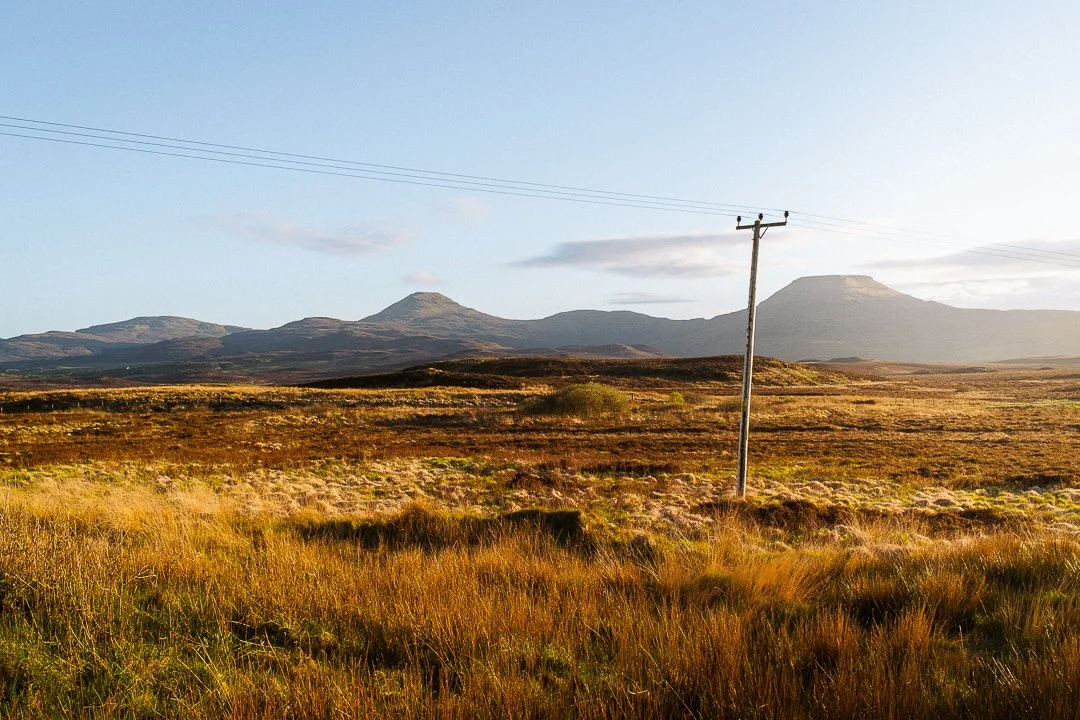
Even the seemingly unremarkable agricultural landscapes along the northern and north-eastern sections of the NC500 have a certain charm to them. They're worth slowing down for.
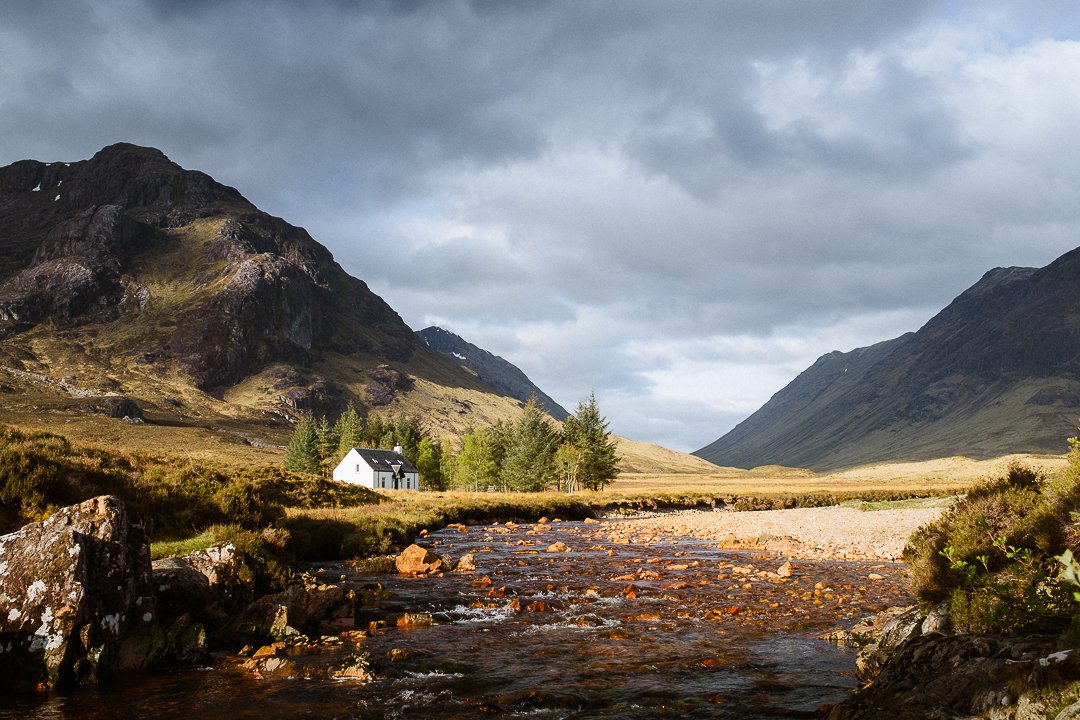
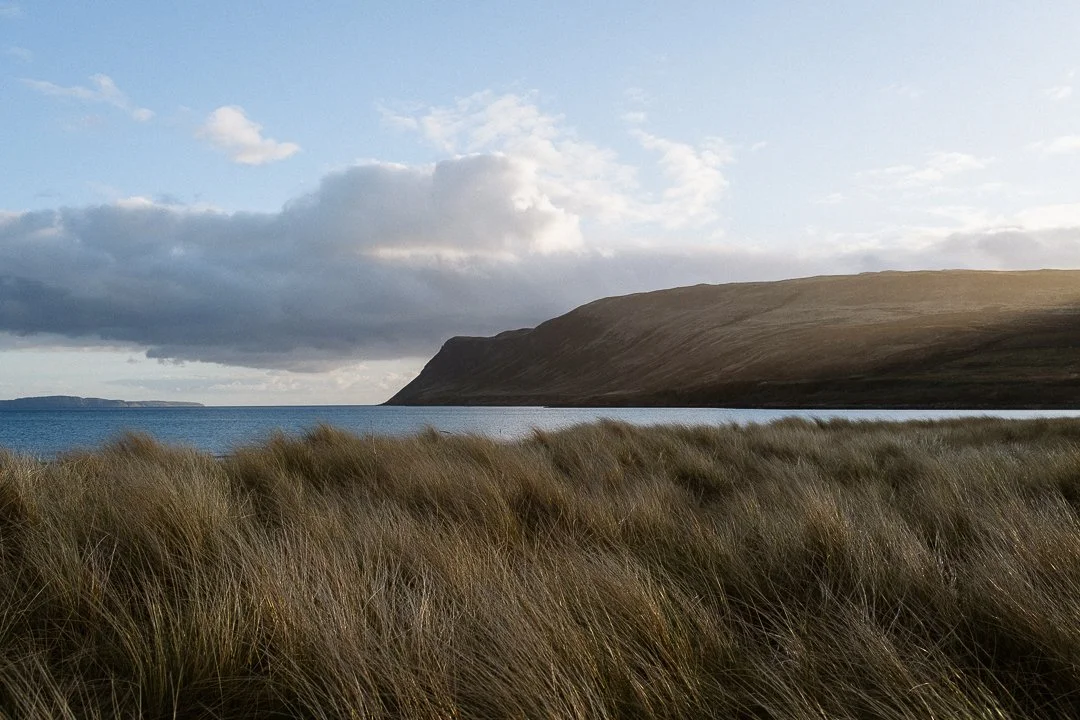
Photographically speaking, Scotland feels almost unfair at times. The pictures practically make themselves.
Whether you're a dedicated landscape photographer, someone drawn to travel and documentary work, or even a street photographer, you'll find plenty to work with here.
The real challenge isn't finding subjects. It's learning to work with the light.
If your ideal forecast involves deep blue skies and endless sunshine, Scotland may require a small adjustment of expectations.
For much of the year, the weather is moody, rainy, and overcast.
At first, you learn to tolerate those conditions. Then you learn to work with them. And eventually, if you're anything like me, you learn to appreciate them.
Because my experience of Scotland has taught me one thing above all else: she's beautiful when she's moody.
Where to go, what not to miss, and the places that left the biggest impression on me - that will have to wait for part two.
Stay tuned.
Continue reading for more road trips inspirations
→ MA-10 Mallorca - photography road trip guide