
100-day photography challenge
100 Exercises to Improve Your Photography for good
What is 100-day photography practice challenge?
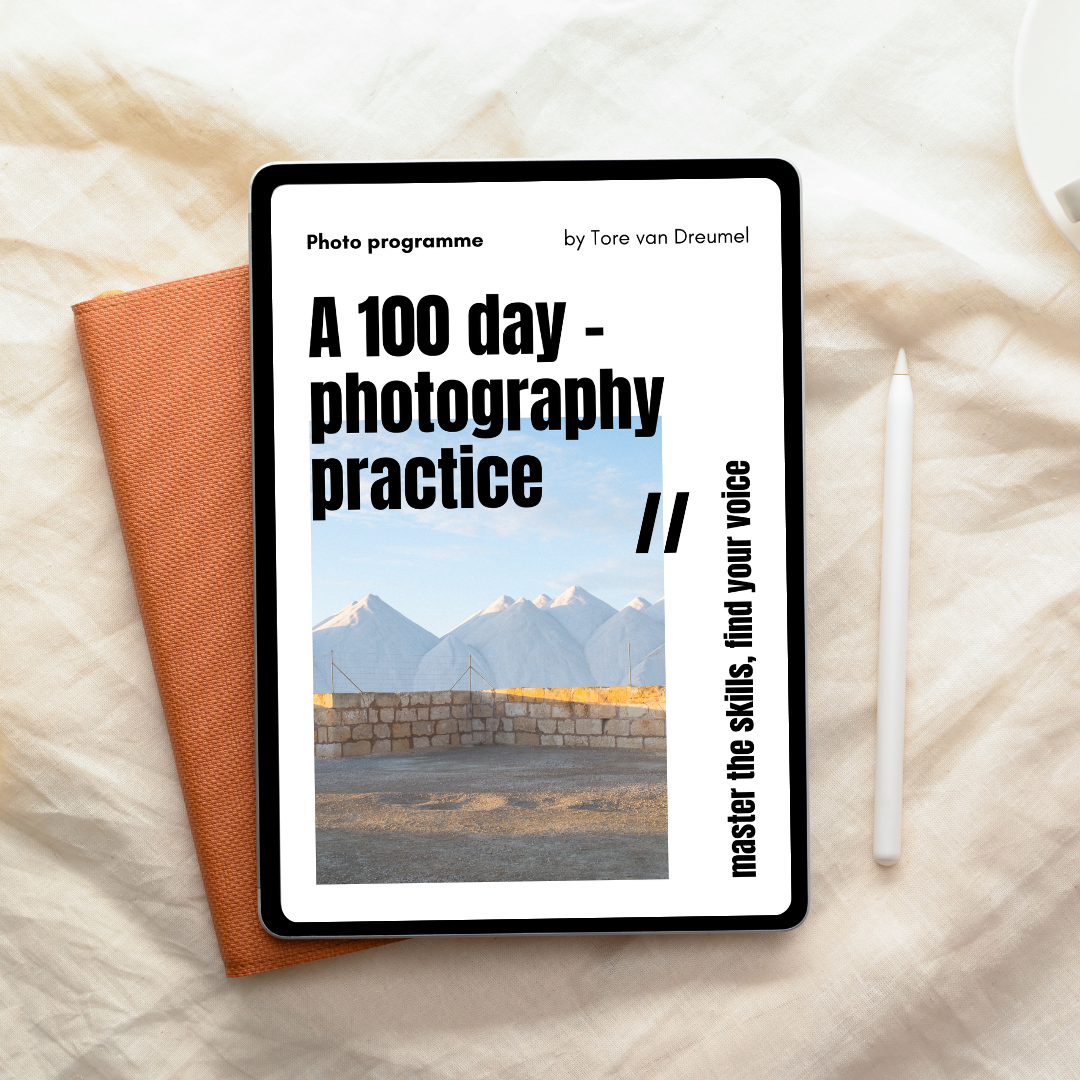
The 100-Day Photography Practice is a daily photography challenge that helps you build a creative habit, strengthen your eye, and develop your own style.
Each day brings a new photography exercise, designed to push your skills and spark inspiration, so by the end of 100 days, you’ll see real growth in your photography and confidence to create independently.
No matter your genre or experience level, showing up every day is the key - and this programme gives you the structure, guidance, and inspiration to do just that.
One of the best ways to improve photography skills is regular practice.
The 100 Day Programme was created exactly for that purpose.
Why I created this photo programme?
About a year ago I felt a bit stuck and I needed to push my creative boundaries a bit. So I decided to take on the “one photo a day” challenge.
Photographing every day for half a year was without a doubt one of the best things I’ve ever done for my photography.
It literally changed everything: it improved the way I observe the world, my technical and compositional skills, helped me build a coherent style, and forced me to look for inspiration absolutely everywhere.
Creative work can also feel overwhelming when clarity is lacking.
I created this programme to guide you towards the same shift by giving you a reason to pick up your camera.
You will find your own photographic voice by showing up every day.
Because just like a muscle weakens if unused, creativity needs regular exercise.
For whom is 100-day programme?
the programme is for beginner and intermediate photographers from any genre
for those who want to challenge themselves with regular practice
anyone who sometimes feels stuck or unsure which path to take
it’s designed to bring regular creative practice into daily routine by fulfilling one photo task a day
What will you find in the programme?
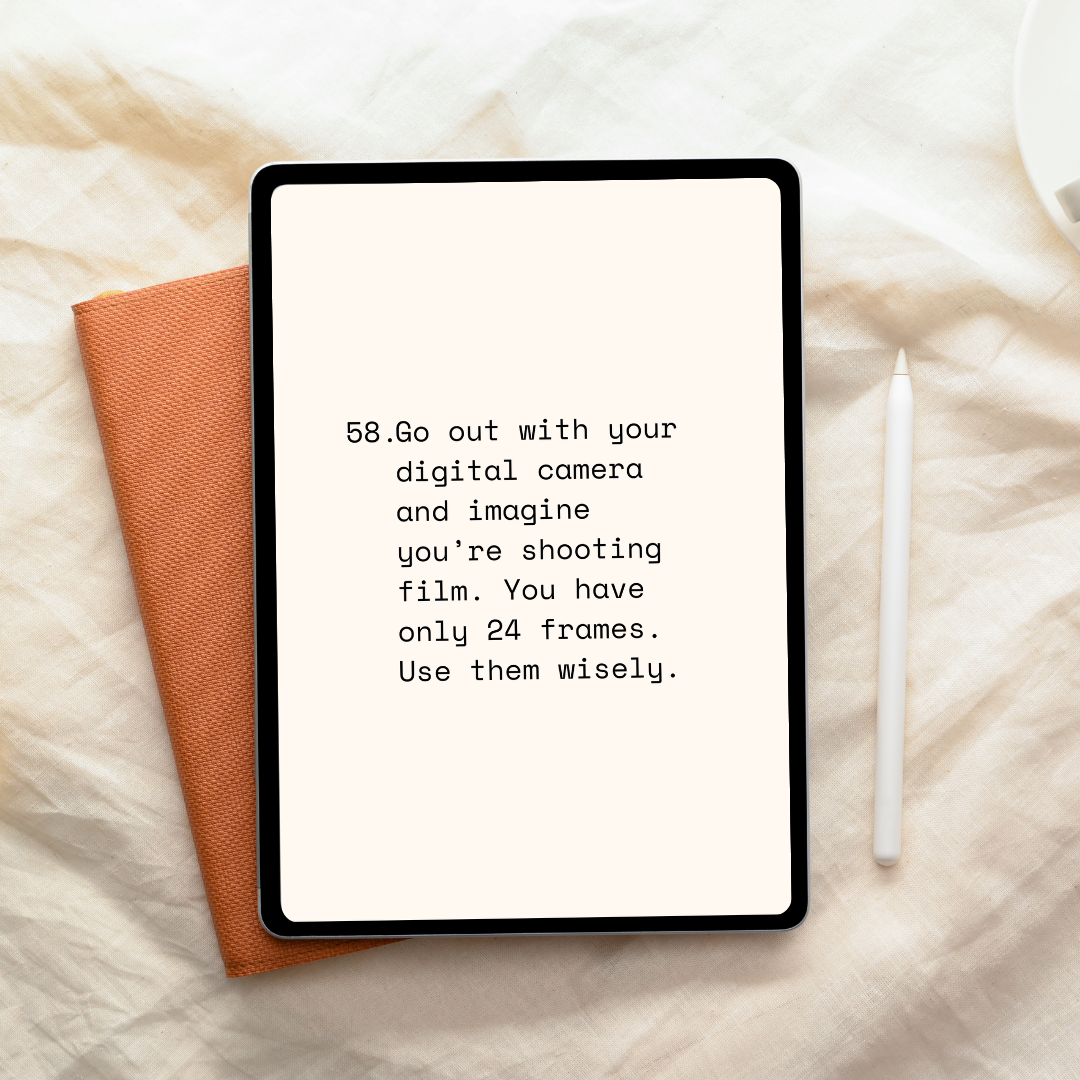
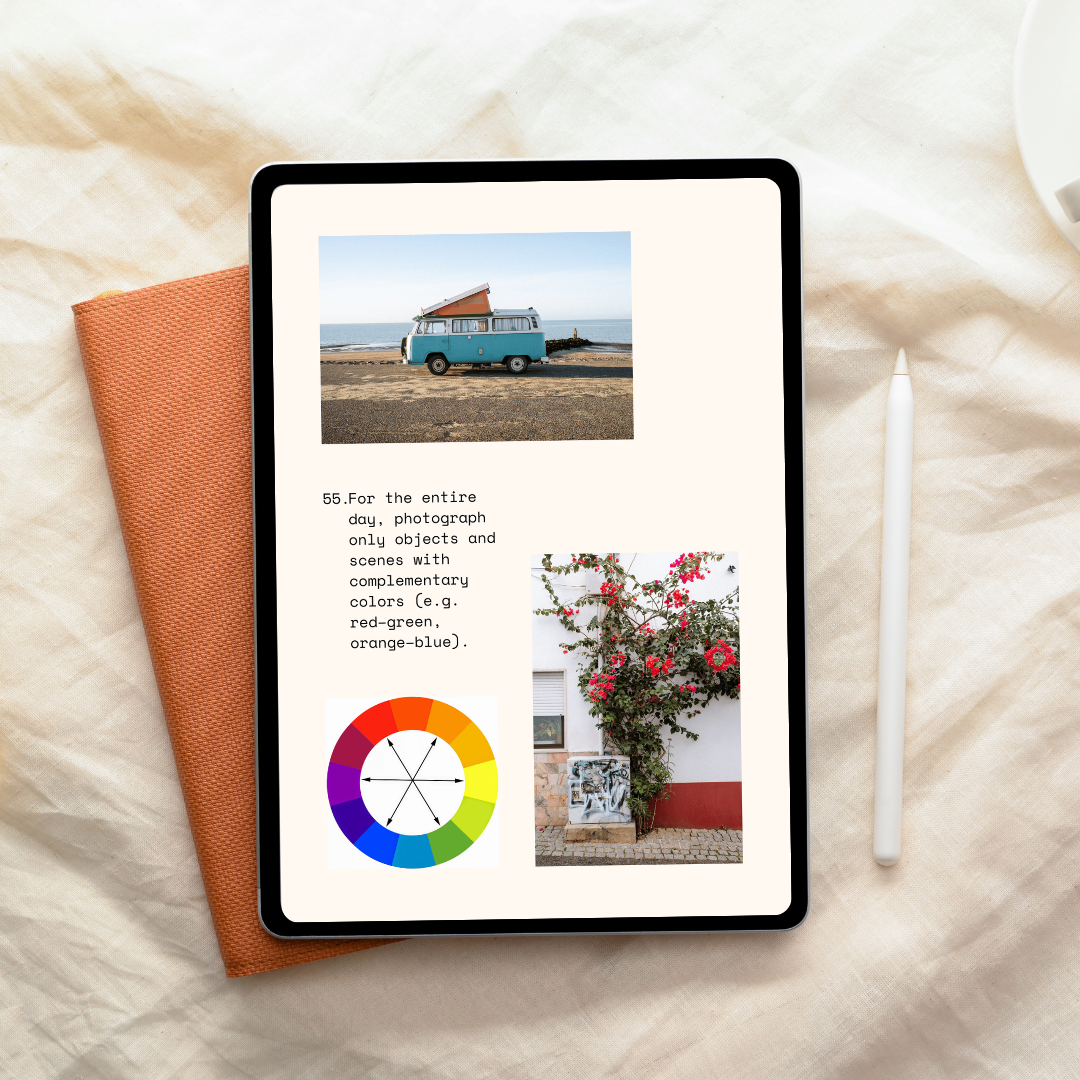
100 photography tasks, one for each day
four chapters: Art of Noticing, Mastering Visual Aspects, Developing Style and Finding Inspiration
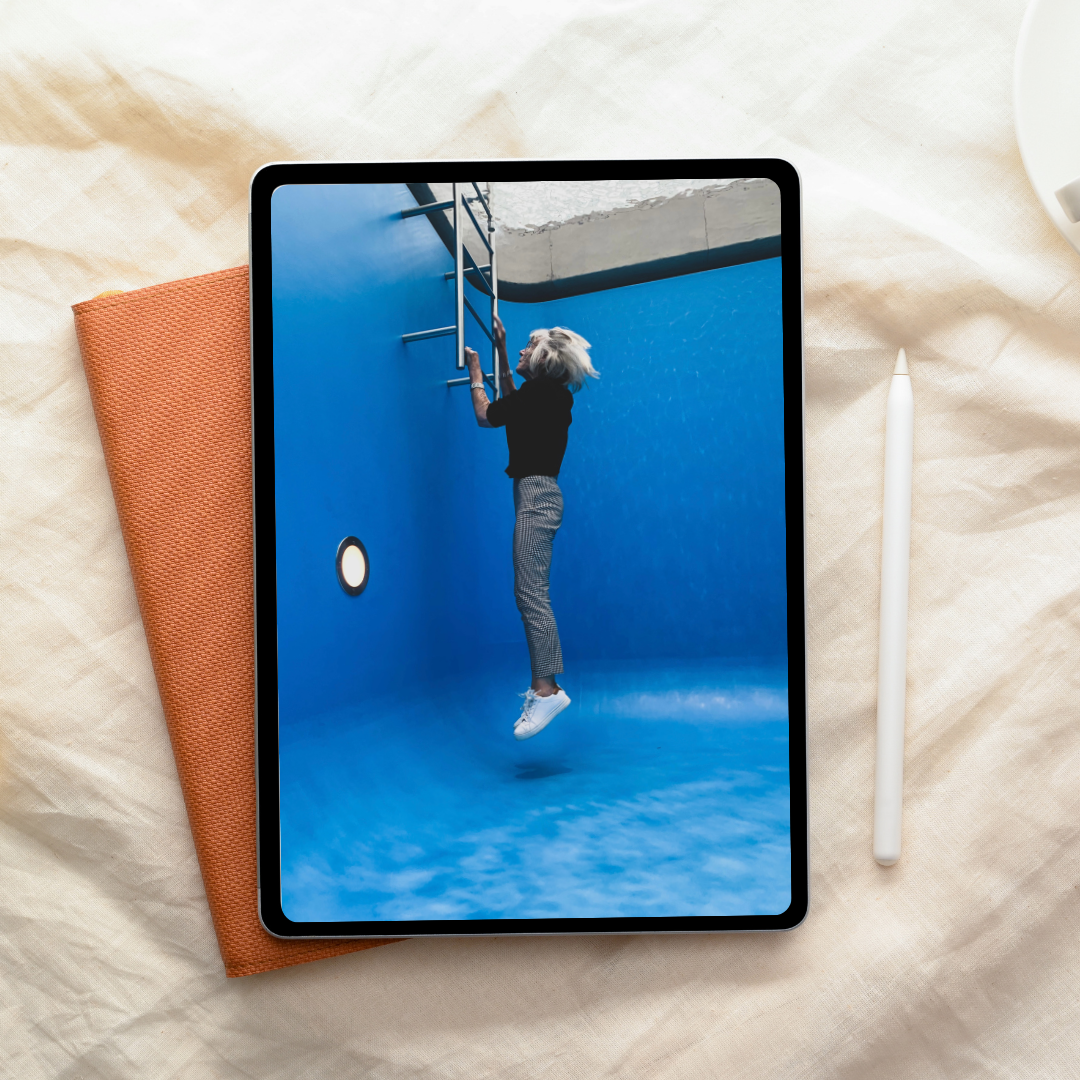
100+ photos as inspiration and reference for how I approached the tasks
tips and guidance how to achieve specific results.
How to get the most of this programme?
tackle the programme in any way you like
you do not have to complete tasks every day, follow them at your own pace
miss a day or two? Pick up where you left off
each task can take 15–30 minutes, depending on how deeply you want to engage
you can follow the order, pick tasks at random, or repeat the ones you enjoy most
showing up is more important than the result.
What will you gain after 100 days?
a stronger, more confident photographic eye
a habit of regular creative practice
a vision on what, when, where and how to shoot
a strong foundation to master composition, lighting, color and other visual aspects and patterns
over 100 images documenting the growth of your vision
confidence to start your own projects and continue exploring independently.
By the end of the 100 days, you will look back on at least 100 photos with satisfaction, seeing your progress and the confidence that comes from showing up, day after day.
“I really tried to be critical here but I like the way Tore approached this.
The programme is easy to follow. You can start straight away, and in your own order, I like that! Very good to see the 4 different categories to get some direction.”
“Many of these tasks are great ideas that can help a beginner “see” and get to know their camera. They provide lots of inspiration for the stuck photographer.
I really like the inclusion of Tore’s photos as examples.”
“It’s an easy to use guide that motivates me to get out with the camera. The 100 diverse assignments in combination with sample photos gave me the push I needed.”
-
Yes. The programme is designed for beginner and intermediate photographers. Tasks focus on seeing, awareness, and visual exploration rather than technical difficulty, so you can work with any camera, including your phone.
-
Any camera is fine — DSLR, mirrorless, compact, or smartphone. The programme develops your eye and visual thinking, and it’s not about gear.
-
Most tasks can be done in 15–30 minutes. Some may naturally expand if you want to explore further, but the intention is to make practice possible even on busy days.
-
That’s completely normal. You can return at any time and continue where you left off. The programme is meant to support your practice, not create pressure.
-
The programme includes prompts, guiding context, and selected examples to help you approach the tasks. The goal is to inspire exploration rather than prescribe exact outcomes.
-
No, it’s a structured creative practice programme. There are no lessons or technical lectures. Instead, you build skill through doing and observing.
-
Not in the base programme, but 1:1 mentoring options are possibly coming.